
What's inside
As an Amazon Associate I earn from qualifying purchases. This post may contain affiliate links at no extra cost to you.
Cooling pad vs laptop stand for laptop is a comparison between two products that look interchangeable on a desk and solve almost opposite problems. A cooling pad is a fan deck that blows air at your laptop’s underside to lower its temperatures. A laptop stand is a structure that raises the screen to your eye level and the keyboard to an angle, improving your posture and, incidentally, letting air circulate beneath the machine. Confusing them is expensive in a specific way: the worker with neck pain who buys a cooling pad gets a louder desk and the same pain, and the gamer whose laptop throttles who buys a pretty stand gets better posture at the same frame rate. This guide separates the two jobs completely, compares six real products, three of each kind, and gives you the diagnostic questions that decide which one your desk needs, or, in the common and happy case, whether a stand plus a small change in how the laptop breathes solves both problems for the price of one purchase.
Set the thermal expectation honestly before any product appears, because cooling pads suffer from their category’s advertising more than most. A conventional cooling pad, fans under a mesh deck, typically lowers a hard-working laptop’s temperatures by a few degrees, sometimes enough to delay or reduce thermal throttling, sometimes not measurably at all, depending on where the laptop’s intakes are and how its internal cooling is designed. The new sealed, high-pressure pads in this table do considerably better on gaming laptops by forcing air through the machine rather than past it. No pad, of any kind, repairs a laptop whose vents are clogged with dust, whose thermal paste has aged out, or whose workload exceeds its design, and the buying guide includes the free diagnostics to run before money is spent, because a can of compressed air and a settings change have saved more laptops than every product below combined.
Our Top Picks
Cooling Pad vs Laptop Stand for Laptop: Two Jobs, Two Tools
What a Cooling Pad Actually Does, and When It Works
A laptop cools itself from the inside out: heat pipes and internal fans move heat from the processor and graphics chip to fins at the vents, and the machine’s appetite for cool intake air, drawn usually from grilles on its underside, is where a pad can help, by supplying moving air at those intakes and carrying heat away from the chassis. The pad therefore works in proportion to three facts about your laptop: it must intake from the bottom, as most gaming and performance laptops do; its internal cooling must have headroom the extra airflow can feed; and its workload must actually push it to the temperatures where throttling begins, sustained gaming, rendering, compiling, and simulation, not the bursty work of documents and browsing, which no pad will make feel faster. Thin laptops that intake through the keyboard or the hinge, and most modern MacBooks, whose thermal design barely uses the underside at all, gain little to nothing from a fan deck, and their owners should read this guide for its stand half and spend the pad money elsewhere, with this article’s blessing.
What a Laptop Stand Actually Does, and Why It Is an Ergonomic Purchase
A laptop used on a flat desk places its screen six to eight inches below the user’s eye level, and the neck pays for every one of those inches, all day, in the forward tilt that ends in the familiar evening ache. A stand raises the screen to the ergonomic line, top of the display near eye level, and in doing so it creates two obligations the buyer must accept with open eyes: at stand height and angle, the laptop’s own keyboard and trackpad become unusable for real work, so an external keyboard and mouse join the purchase, and the desk gains a workstation’s footprint. In exchange, the stand returns the user’s posture, and it gives the laptop a passive thermal gift: an underside exposed to room air on all sides instead of insulating itself against a desk, worth a small temperature improvement on any machine and a larger one on the fanless and thin designs that shed heat through their chassis. Judge a stand, then, as furniture: stability, adjustability, build, and the grace with which it folds or stays, and judge a pad as an appliance: airflow, noise, and degrees. The table below keeps the two judgments in separate columns of the mind, which is where they belong.
The Overlap: Raised Pads, Cooling Stands, and the Hybrid Compromise
The market, sensing the confusion, sells hybrids: cooling pads on tilting decks that raise the laptop somewhat, and stands with a fan built in. Most hybrids do their second job at a discount, a pad’s tilt is not a stand’s height, and a stand’s token fan is not a pad’s airflow, and this guide’s counsel is to buy for your primary problem at full quality and let the secondary benefit be whatever it is. The one hybrid worth its own sentence is the adjustable stand used by the gaming laptop owner: elevation for the screen during work, the machine’s underside freed for its own fans, and, if thermals still demand it, a sealed high-pressure pad bought later, for the gaming hours, that the stand’s owner can evaluate with a clear head and a temperature log rather than with a hope.
Cooling Pad vs Laptop Stand for Laptop: Quick Comparison
| Product Model | Type and Key Specs | Best For | Typical Price Range | Rating |
|---|---|---|---|---|
| IETS GT600 Laptop Cooling Pad | Cooling pad, sealed foam design, high-speed blower in this line class, dust filter, RGB and hub versions in this line class | Best cooling performance for gaming laptops | $80 – $110 | 4.6 / 5 |
| Cooler Master NotePal X3 | Cooling pad, large 200mm fan class, mesh deck, adjustable height settings, fan speed control | Best classic cooling pad value | $35 – $50 | 4.2 / 5 |
| Thermaltake Massive 20 RGB | Cooling pad, 200mm fan class, RGB lighting, adjustable speed and height in this line class, up to large laptops | Best pad for large gaming setups | $55 – $75 | 4.1 / 5 |
| Rain Design mStand | Fixed aluminum stand, raises screen about 6 inches class, cable management, anodized finishes | Best fixed stand for a permanent desk | $45 – $60 | 4.5 / 5 |
| Nulaxy Laptop Stand (dual pivot adjustable) | Adjustable aluminum stand, height and angle range in this line class, foldable, wide laptop compatibility | Best adjustable stand value | $30 – $50 by version | 4.4 / 5 |
| Twelve South Curve | Fixed curved aluminum stand, raises screen about 6.5 inches class, minimalist design, premium finish | Best design-led fixed stand | $60 – $80 | 4.3 / 5 |

Kootek Laptop Cooling Pad Cooler Stand with 5 Quiet Fans for 12"-17" Laptop | 5 Quiet & High‑Performance Laptop Fan for 360° Full Coverage, USB‑Powered, 2 Extra USB Hubs, 6 Adjustable Height, Blue LED
As an Amazon Associate we earn from qualifying purchases. Product prices and availability are accurate as of the date/time indicated.
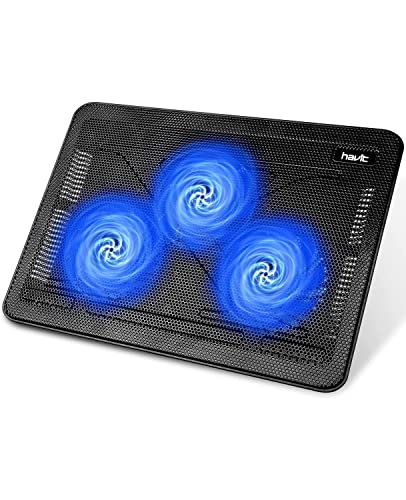
havit HV-F2056 Laptop Cooling Pad for 15.6-17 Inch Laptops, Black | Three quiet USB-powered fans circulate air below the laptop, two height settings improve viewing and typing comfort
As an Amazon Associate we earn from qualifying purchases. Product prices and availability are accurate as of the date/time indicated.

FlexiKold Gel Soft Flexible Ice Packs for Injuries - Reusable Freezer Cold Pack, Cold Compress & Cooling Gel Pad for Face, Shoulder, Hip, Leg, Arm, Ankle & Foot Injury - Medium - 7.5” x 11”
As an Amazon Associate we earn from qualifying purchases. Product prices and availability are accurate as of the date/time indicated.
Prices shown are approximate and for reference only. Prices change often, so please check the current price on Amazon before you buy.
Specifications summarize manufacturers’ published information for current models and versions. Cooling results vary by laptop model and workload, as this guide explains; no rating here promises a specific temperature drop. Ratings are editorial, weighing performance at the product’s own job, build, noise, and value.
The Six Products Reviewed
1. IETS GT600: Best Cooling Pad, by a Distance
The GT600 and its sealed-pad rivals changed what a cooling pad can claim: instead of fans stirring air beneath a mesh, a high-speed blower pressurizes a chamber sealed against the laptop’s underside by a foam gasket, forcing air through the machine’s own intakes and out its vents, which on a compatible gaming laptop produces temperature reductions in a different class from the classic pad, with a dust filter keeping the machine’s internals cleaner as a second, quiet benefit. Its costs are its noise at full speed, which is a gaming headset’s problem rather than a library’s solution, its price, and its fit, which wants a laptop whose underside and size suit the gasket. For the throttling gaming laptop that this guide’s diagnostics have confirmed, it is the only pad whose purchase needs no apology.
2. Rain Design mStand: Best Fixed Stand
The mStand is the stand as furniture: a single piece of anodized aluminum that raises a laptop to a correct, fixed working height, routes its cables, matches a MacBook’s finish or a black desk’s mood, and then disappears from its owner’s thoughts for a decade. Its fixity is its philosophy, no hinges to wobble, no adjustments to creep, and for the permanent desk with an external keyboard and mouse, that philosophy is wisdom. Travelers and tinkerers should buy the adjustable below. The settled worker should buy this, once, and let the absence of decisions be the luxury it quietly is.
3. Nulaxy Adjustable Stand: Best Adjustable Value
Nulaxy’s dual-pivot stand brings the two adjustments that matter, height and angle, in aluminum that folds for a bag and holds its position under a real laptop, at a price that makes the ergonomic argument available to every desk in this guide’s readership. It serves the hybrid worker, desk today, kitchen table tomorrow, and the shared desk whose two users sit at different heights. Its joints will never feel like the mStand’s monolith, and in exchange it goes where the monolith cannot. For the first stand a worker buys, uncertain of their perfect height, its adjustability is not a compromise. It is the research instrument that finds the number, and then it simply keeps working.
4. Cooler Master NotePal X3: Best Classic Pad Value
The NotePal X3 is the classic pad honestly executed: one large, comparatively quiet fan under a mesh deck, a modest tilt, and a price that asks little of the buyer whose laptop runs warm and whose expectations this guide has set. It will shave a few degrees from a bottom-intake laptop under sustained load, it will make a lap-used machine kinder to its owner, and it will not transform a throttling flagship, because physics priced that transformation at the IETS’s level. Bought with those expectations, it is a good tool at a fair price, and a generation of them under warm laptops says the formula endures because the need does.
5. Twelve South Curve: Best Looking Fixed Stand
The Curve raises a laptop on a single sweep of aluminum that looks like a sketch of the idea of a stand, and for the desk that is also a room, a studio, a client’s first impression, that grace is a function and not a frivolity. Its height and angle are fixed in the same class as the mStand’s, its price buys finish and form in proportions its buyer should choose knowingly, and its thermal contribution is the stand’s usual passive gift. It is included because desks are lived at, and an object used eight hours a day is allowed to be beautiful, provided, as here, that it is first useful.
6. Thermaltake Massive 20 RGB: Best Pad for the Big Gaming Desk
Thermaltake’s Massive serves the large gaming laptop and the desk that celebrates it: a big deck, a big fan, lighting to match the rig, and height settings that give the setup a stage. Its cooling is the classic pad’s, honest degrees rather than the sealed pad’s transformation, and its buyer is purchasing the whole presentation with the cooling included. For the battlestation that is also a hobby’s showpiece, that is a coherent purchase. For the worker with a thermal problem and no interest in the show, this guide points upward in the table, to the sealed pad, or backward in the article, to the diagnostics that might make any pad unnecessary.
Buying Guide: How to Choose Between a Cooling Pad and a Laptop Stand
Step One: Diagnose Before You Buy, With Free Evidence
Establish which problem you have, in numbers. For heat: run your real workload with a free temperature monitor open, and record the processor and graphics temperatures and whether performance falls as they climb, the signature of throttling; then prop the laptop’s rear edge up on a book, freeing its underside, and run it again, because if that two-centimeter lift recovers most of the performance, a stand or a classic pad will serve, and if nothing changes, the problem lives inside the machine, dust, paste, or a failing fan, and belongs to a cleaning and a service bench, not to this table. For posture: photograph yourself working, or have the desk’s other occupant do it, and read your neck’s angle without mercy. Most buyers who perform both tests discover their problem is singular and named, and the purchase that follows is the first one they have made with evidence.
Step Two: Buy the Tool for the Named Problem, Completely
If the problem is heat in a bottom-intake performance laptop, buy the sealed pad if throttling is severe and the classic pad if it is mild, and budget the headset or accept the fan noise as the sound of the solution. If the problem is posture, buy the stand and, in the same order, the external keyboard and mouse without which the stand cannot be used, because a stand bought alone becomes a shelf within a week, a fate this guide has watched befall better intentions than yours. If the problem is both, buy the stand and keyboard first, re-run the thermal test at stand height, where the freed underside may have solved the heat as a passenger, and buy the pad afterward only on the evidence that remains. Sequenced this way, the two purchases stop competing, and the second is often never made.
Step Three: Set Up, Measure Again, and Keep the Air’s Roads Open
Set the stand so the screen’s top sits near eye level and the external keyboard keeps your elbows at a relaxed right angle, or set the pad so its seal or deck aligns with your laptop’s intakes as its maker directs, and then repeat Step One’s measurement and keep the result, because a setup verified is a setup finished. Maintain whichever you bought as the air’s infrastructure: pad filters and decks vacuumed, laptop vents blown clear on a season’s rhythm, cables routed so the rear exhaust of a working machine is never blowing into a wall’s embrace or a curtain’s fold. The desk that results, screen high, neck straight, machine breathing, is worth more than either product’s price, and it began, as this guide began, with refusing to confuse two different kindnesses a desk can do a laptop and its owner.
Frequently Asked Questions About Cooling Pads vs Laptop Stands
Do cooling pads actually work?
Yes, within limits that depend on your laptop’s design, and the honest numbers are these: a classic fan pad typically reduces temperatures by a few degrees on a laptop that intakes air from its underside, which can be enough to soften or delay thermal throttling in sustained work; a sealed, high-pressure pad can do substantially better on a compatible gaming laptop, by forcing air through the machine’s cooling path rather than merely stirring it beneath the chassis. A pad does little for laptops that intake through the keyboard or hinge, for fanless designs, and for most MacBooks, and it does nothing for a laptop whose real problem is internal, clogged fins, dried thermal paste, a failing fan, which is why this guide insists on the book-prop diagnostic before purchase. Work, in this category, is a relationship between the pad and a specific machine, and any product that promises a number of degrees for every laptop is selling the number, not the cooling.
Is a laptop stand better than a cooling pad for gaming?
For the gaming itself, the pad is the tool aimed at the problem, because gaming is the workload that sustains the heat that throttles, and a stand’s passive airflow, while real, is the smaller effect. For the gamer, who is also a person with a neck playing at a desk for hours, the stand may be the better purchase in the same week, and the two are not rivals across a battlestation’s life: many gaming setups end, correctly, with the laptop on a stand for posture, its underside freed, and a sealed pad deployed for the summer and the heaviest titles. Decide by the diagnostic: if the temperature log shows throttling costing frames, the pad first; if the log is clean and the neck is not, the stand first; and let no one sell you a stand as a cooling solution for a throttling machine, or a pad as a cure for a hunched back, because each claim is the confusion this article exists to end.
Can I use a laptop on a stand with its own keyboard?
You can for minutes and should not for hours, because a stand raises and tilts the keyboard away from the geometry your wrists and shoulders are built for: typing on a raised, angled laptop keyboard hikes the shoulders, bends the wrists, and trades the neck’s relief for the arms’ complaint, which is a poor bargain struck daily. The stand’s correct companions are an external keyboard and mouse at desk level, which together cost less than most stands and convert the laptop into a docked workstation with a laptop’s screen as its display. The partial exception is the low, gently tilted stand or pad used to give a typing angle on a lap or a table for short sessions, a different product class with a different job. Buy the stand as the workstation purchase it is, peripherals included in the budget from the first line, and it will be used every day; buy it as a perch for the laptop alone, and it will be used every day for a week.
Why is my laptop still hot on a cooling pad?
Work through the causes in their usual order. The pad’s airflow may not be reaching the intakes, because the laptop intakes elsewhere, the pad’s fans sit in the wrong places for this model’s grilles, or a sealed pad’s gasket does not fit this chassis, each cured by alignment or by accepting the pairing is wrong. The room may be defeating both machines, since a pad can only offer the laptop the air of the room it is in, and a summer room at thirty degrees sets a floor no fan lowers. The workload may exceed the laptop’s design, in which case the durable answers are inside the machine and its settings: clean vents and fins, fans confirmed working, a frame rate cap or a settings reduction that cuts the heat at its source, and, on an older machine, a service for its thermal interface. And the measurement itself may be misleading you, because a gaming laptop’s processor running in the eighties and nineties under full load is commonly within its design, and only throttling, performance falling as temperature climbs, is a problem with a remedy. Diagnose by performance, not by anxiety, and let the pad be a tool in a system rather than a verdict on a machine that may be healthier than its owner fears.
Related guides
- Best Cheap Surge Protector Under 50 in 2026: 7 Affordable Surge Protectors That Offer Strong Surge Protection, Enough Outlets, and Reliable Performance for Home Offices and TVs
- Best Budget USB Hub Under 50 in 2026: 7 Affordable USB Hubs That Add Ports, Speed, and Reliable Connections Without Breaking Your Budget
- Best Ultrawide Monitor Size for Work in 2026: 34, 38, 40, or 49 Inches, Decided by Pixels, Desk Depth, and How Much You Screen-Share
- Best Keyboard for Music Production Software in 2026: How to Pick a MIDI Keyboard That Works Perfectly With Your DAW
More from Amazon
Programs that pair well with the guide above. Offers and eligibility are set by Amazon and may change.
Free shipping on eligible items, Prime Video and more. Eligible new members can start with a free trial.
Start a Prime free trialAd-free music streaming. Eligible new subscribers can start with a free trial.
Try Music Unlimited freeA Prime membership for ages 18-24 with a trial period. Eligibility is set by Amazon.
See Prime for Young AdultsAudiobooks and podcasts to listen to on the go. Eligible new members can start with a free trial.
Try Audible freeAs an Amazon Associate we earn from qualifying purchases.

Write Your Review
No reviews yet. Be the first to share your experience!