
What's inside
- Best Wireless Controller vs Wired Controller for Competitive Gaming: The Honest Ledger
- Quick Comparison: Wireless and Wired Competitive Controllers Compared
- Best Wireless Controller vs Wired Controller for Competitive Gaming: The Six Reviewed
- Buying Guide: How to Choose Between Wireless and Wired for Competitive Gaming
- How We Selected These Competitive Controllers
- Frequently Asked Questions About Wireless vs Wired Controllers for Competitive Gaming
As an Amazon Associate I earn from qualifying purchases. This post may contain affiliate links at no extra cost to you.
The best wireless controller vs wired controller for competitive gaming debate survives on a fact that used to be decisive and is now merely interesting: the cable used to be faster, full stop, and for a generation of fighting-game and shooter players that settled it. Modern 2.4GHz wireless — the dongle-based kind, not Bluetooth — has closed the latency gap to a margin that sits below what a player can perceive and close to what measurement rigs argue about, which moves the real contest to the ground this guide fights it on: polling rates, connection consistency under tournament conditions, battery as a failure mode, stick and trigger technology, and the rules of the specific competitions you actually enter. The wired controller keeps genuine crowns — it cannot drop, it cannot die, it costs less for the same internals, and it is legal everywhere without discussion. The wireless flagship keeps its own — freedom of posture and movement, a clean desk and stage, and performance that no longer apologises. This guide compares the real controllers on both sides and gives the verdict by game and by level, because “competitive” describes a Sunday ranked queue and a televised final with the same word and very different stakes.
First, the latency question, stated with the precision it deserves and without the mythology it attracts. Total input delay is a chain — the controller’s own processing, the connection’s polling, the console or PC’s handling, the game’s engine, and the display — and the controller’s link is one link of it. A wired controller polls at its USB rate continuously and identically, which is its true advantage: not raw speed so much as sameness. A modern 2.4GHz wireless controller polls at comparable rates with occasional variance, and Bluetooth — designed for convenience, with lower and less consistent polling — is the connection this guide excludes from serious competitive use entirely, whatever controller carries it. The practical translation: on PC and console alike, a good wireless dongle connection is competitively indistinguishable from wired for the overwhelming majority of players and games, while wired remains the zero-variance choice for the level where a single dropped or delayed input is a round, a match, or a salary. Both sentences are true, and the buying guide below is built to tell you which one governs your gaming.
The second contest is fought inside the shell, and it matters more than the cable question at most levels. Stick technology divides the field: traditional potentiometer sticks wear and drift with time, while Hall effect and TMR magnetic sticks sense position without contact and hold their calibration — a competitive longevity argument that now appears on both wired and wireless models in this table. Trigger stops that shorten a shooter’s trigger pull, remappable back buttons that keep thumbs on sticks, and polling rates at and above the standard figures are the features ranked players actually feel. Judge the controllers below by those internals first and their connection second, because a drifting stick loses more rounds than a dongle ever will — and then let the connection decision be made by your venue, your rules, and your tolerance for the battery’s small, real risk.
Our Top Picks
Best Wireless Controller vs Wired Controller for Competitive Gaming: The Honest Ledger
Where Wired Still Wins: Consistency, Cost, and Zero Ceremony
The wired case is a list of things that cannot happen. The connection cannot be interfered with by the forty other wireless devices in a tournament hall. The battery cannot fade in a final, because there is none. The pairing cannot fail, the dongle cannot be left in another city, and the firmware cannot decide that today is a day for updates. Add the economics — wired models deliver flagship internals, Hall sticks and trigger stops included, at prices the wireless flagships cannot approach — and the wired controller is the rational default for the desk-bound PC competitor and the tournament player whose rules or nerves prefer certainty. Its costs are physical: a cable to manage across the desk or the lap, a tether that punishes the player who moves with the game, and a setup that belongs to one station rather than travelling between the desk, the couch, and the venue.
Where Wireless Has Earned Its Place: Freedom Without the Old Apology
The wireless case is now made without the asterisk it carried for a decade. On a 2.4GHz dongle, the current flagships poll fast and hold their connection through a home’s ordinary radio weather, and the freedom they buy is competitive as well as comfortable: posture unanchored, the controller passed between stations, the fighting-game player seated in the venue’s chair rather than the cable’s radius. Platform matters to the verdict — console ecosystems have matured their wireless to the point where their own flagship controllers are wireless-first, while the PC remains the wired sceptic’s home ground, with both connections equally supported. The wireless costs are the mirror of the wired virtues: a battery to charge and eventually to age, a price premium for the same internals, and a small, manageable variance that the very top level may still decline. Manageable is the operative word — the buying guide’s routine makes it so — and for most competitors it is managed completely.
The Middle Path Most Pros Actually Live: Wireless Controller, Wired at the Desk
Nearly every flagship wireless controller in this table also works wired over USB-C, and that dual nature is the settlement the market has quietly reached: wireless for the couch, the venue’s casual stations, and the daily grind; the cable plugged in for the tournament set, the ranked session that matters, and the charging that tops the battery while you play. The player who buys a dual-mode flagship has not dodged the question — they have answered it with a controller that holds both citizenships, at the flagship price that dual citizenship costs. The pure wired models remain the value champions and the pure Bluetooth conveniences remain excluded, but the centre of competitive gaming now lives exactly there: one controller, two connections, chosen per occasion. This guide’s table is organised to make that centre easy to buy.
Quick Comparison: Wireless and Wired Competitive Controllers Compared
| Controller Model | Connection / Best For | Key Specs | Typical Price Range | Rating |
|---|---|---|---|---|
| 8BitDo Ultimate 2 Wireless | Wireless 2.4G — best value flagship | TMR sticks, 2.4GHz dongle and wired modes, charging dock, remappable back buttons as published | $60 – $80 | 4.7 / 5 |
| GameSir G7 SE | Wired — best wired competitive value | Hall effect sticks, high polling rate over USB, remappable back buttons, Xbox-licensed as published | $40 – $55 | 4.7 / 5 |
| Xbox Elite Series 2 | Wireless — best console flagship | Adjustable-tension sticks, four paddles, Bluetooth and USB-C wired modes, charging dock as published | $150 – $180 | 4.6 / 5 |
| Razer Wolverine V3 Pro | Wireless 2.4G — best for PC and Xbox pros | HyperSpeed wireless, Hall effect sticks, six remappable buttons, trigger stops as published | $180 – $210 | 4.6 / 5 |
| DualSense Edge | Wireless — best PlayStation flagship | Replaceable stick modules, back buttons, trigger stops, Bluetooth and wired modes as published | $180 – $210 | 4.5 / 5 |
| Victrix Pro BFG | Wireless and wired — best fighting game choice | Modular layout with fightpad module, 2.4GHz and wired modes, PlayStation and PC versions as published | $160 – $190 | 4.5 / 5 |

8Bitdo Ultimate 2C Wireless Controller for Windows PC and Android, with 1000 Hz Polling Rate, Hall Effect Joysticks and Triggers, and Remappable L4/R4 Bumpers (Green)
As an Amazon Associate we earn from qualifying purchases. Product prices and availability are accurate as of the date/time indicated.

PlayStation DualSense™ Wireless Controller - for PS5, PC, MAC & Mobile
As an Amazon Associate we earn from qualifying purchases. Product prices and availability are accurate as of the date/time indicated.
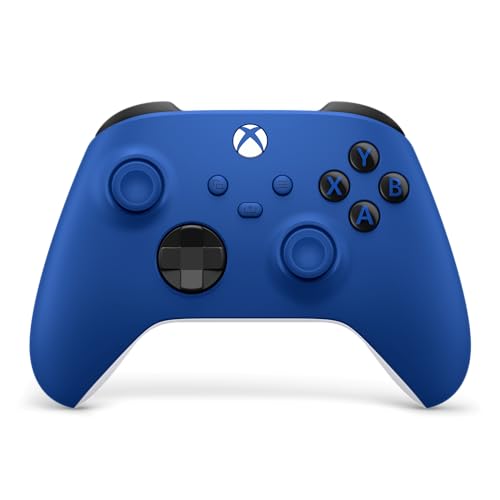
XBOX Wireless Gaming Controller | Shock Blue | Textured triggers and bumpers, Hybrid D-pad, XBOX Wireless, Bluetooth, USB-C, Play across Console & PC & Cloud Devices
As an Amazon Associate we earn from qualifying purchases. Product prices and availability are accurate as of the date/time indicated.
Ratings are editorial assessments for competitive use, based on the makers’ published connection types, stick technology, polling specifications, and features, and value at typical prices. Prices are typical retail ranges. Polling rates and latency vary by platform, mode, and firmware; the makers’ current specifications for the exact model and connection govern, and tournament legality must be confirmed with each event’s own rules.
Best Wireless Controller vs Wired Controller for Competitive Gaming: The Six Reviewed
1. 8BitDo Ultimate 2 Wireless – Best Value Flagship
8BitDo’s flagship is the dual-citizenship settlement at a price that embarrasses the first-party flagships: magnetic TMR sticks that will not drift their way out of a career, a proper 2.4GHz dongle, a charging dock that makes the battery a non-issue at home, and wired mode for the sessions that want the cable. Its back buttons and software remapping cover the competitive checklist entire. For the PC competitor — and the multi-platform household — it is this guide’s first recommendation, and the standard against which the expensive names below must justify themselves.
2. GameSir G7 SE – Best Wired Value
The G7 SE is the wired case made irresistible: Hall effect sticks, high-rate USB polling, back buttons, and an official console licence, at a price below most standard controllers. It has no battery to die and no connection to argue about, and its drift-proof sticks answer the wired school’s own oldest weakness — the controller that ages out of calibration. For the desk-bound competitor and the tournament traditionalist, it is not the budget option. It is the correct one, and its rating ties the flagship above it because within its parish it lacks nothing.
3. Xbox Elite Series 2 – Best Console Flagship
The Elite remains the console flagship by accumulation: adjustable stick tension, four paddles, a wrap of materials that feel like equipment, and platform integration no third party matches on its home console. Its potentiometer sticks are its known compromise against the magnetic school — the flagship’s one dated component — weighed against everything else it does superbly. On Xbox and in the living room’s competitive life, it is the establishment choice, and establishments earn the title.
4. Razer Wolverine V3 Pro – Best Wireless Pro for PC and Xbox
Razer’s flagship answers the latency question with its fastest wireless, magnetic sticks, six extra remappable inputs, and trigger stops built for the shooter parish. It is priced at the summit and specced like it, with the esports scene’s requirements read carefully and answered in order. For the wireless-committed competitor on PC or Xbox who wants no compromise listed anywhere on the box, it is the flagship of that conviction.
5. DualSense Edge – Best PlayStation Flagship
Sony’s Edge brings the DualSense’s haptics and adaptive triggers into the competitive class with replaceable stick modules — a longevity answer unique in this table, since a drifting stick becomes a swapped module rather than a retired controller — plus back buttons and trigger stops. Its battery life is the flagship class’s shortest, which its parish answers with the cable this guide keeps recommending for the sessions that matter. On PlayStation, it is the competitive standard by platform as much as by specification.
6. Victrix Pro BFG – Best for Fighting Games
The Pro BFG’s modular design — swappable stick and button layouts, including a six-button fightpad module — makes it the fighting-game community’s flagship, a community whose wired tradition is the strongest in gaming and whose verdict this controller respects by excelling in both modes. Its tournament credentials are its community’s own. For the player whose competitive life is brackets and best-of-fives, it is the specialist the generalists in this table cannot replace.
Buying Guide: How to Choose Between Wireless and Wired for Competitive Gaming
Decide by Venue, Game, and the Rules That Govern You
Start with the least glamorous question, because it outranks the rest: what do your competitions allow and provide? Some tournaments mandate wired play or specific controllers; some console brackets run the platform’s own wireless without a thought; online ranked play allows whatever your conscience and this guide permit. Read your scene’s rules first. Then weigh your games: frame-tight fighting games and rhythm-precision titles make the strongest wired case; shooters and sports titles at every level below the professional are served completely by a good dongle. Finally, your venue: the single desk argues wired or dual-mode; the multi-station life argues wireless. Answer those three and the table sorts itself — the connection is a property of your competitive life, not of the controller’s quality.
Buy the Internals First: Sticks, Stops, and Buttons
Whichever connection wins, spend on the components that decide matches: magnetic sticks for a calibration that survives the season, trigger stops if your games are shooters, back buttons or paddles in the count your games reward, and a polling specification at the platform’s competitive standard or above. Check the remapping software’s reputation as carefully as the hardware’s, because a back button you cannot configure in five minutes is furniture. And handle the controller if you possibly can — grip, weight, and stick tension are hand-shaped facts that no review, including this one, can settle for your hands.
Run the Wireless Discipline, or Enjoy the Wired Simplicity
If wireless wins, adopt the routine that retires its risks: the dongle on a short extension near the controller rather than buried behind the PC, the battery charged on its dock as a habit rather than a rescue, Bluetooth reserved for casual play, firmware updated between tournaments and never before one, and the cable in the bag at every event — the dual-mode settlement carried as insurance. If wired wins, manage the cable like equipment: routed so it cannot snag or drag, with strain relief respected at the port, and a spare in the kit because the cable is now your single point of failure. Either discipline is an afternoon’s learning. Both are cheaper than the round they save.
How We Selected These Competitive Controllers
We included only real, named, currently sold controllers from established makers, spanning wired, 2.4GHz wireless, and dual-mode designs, with published stick technology, polling, and feature specifications. Bluetooth-only controllers were excluded from competitive recommendation as this guide’s latency section explains. Internals — stick sensing, trigger stops, remappable inputs — were weighted alongside connection type, and tournament legality is directed to each event’s rules rather than assumed for any model.
Frequently Asked Questions About Wireless vs Wired Controllers for Competitive Gaming
Is wireless really as fast as wired now?
On a modern 2.4GHz dongle connection, close enough that the difference sits below perception for the overwhelming majority of players and games — the honest answer this guide’s introduction gives in full. Wired retains a real but narrow edge in absolute consistency: its polling never varies, and at the professional level, in frame-tight games, that sameness is still purchased deliberately. Bluetooth is the exception that must not be smuggled into the answer: it is slower and less consistent, and it is not a competitive connection on any controller. Judge your own level honestly — the ranked player’s bottleneck is almost never the dongle, and the professional’s caution is not the ranked player’s requirement.
What polling rate should I look for?
At or above the platform’s standard figures, with the understanding that polling is one link in the delay chain. Standard controllers commonly poll in the low hundreds of hertz; competitive wired models advertise rates up to 1000Hz, and high-rate wireless dongles have climbed into the same conversation. Beyond the standard, returns diminish quickly against the game’s own tick, the display’s refresh, and the player’s hands — which is why this guide ranks stick quality and trigger stops alongside polling rather than beneath it. Buy a competitive specification, then spend your practice hours where the real milliseconds live: in your own reactions.
Do pros use wireless controllers?
It divides by scene, which is this guide’s thesis in one answer. Console leagues built around first-party flagships compete wirelessly as a matter of course; fighting-game and PC tournament traditions lean wired, by rule, by venue practicality, and by a culture that prizes the zero-variance connection; and a great many professionals practise and stream on dual-mode flagships, plugging the cable in when the set matters. The pattern to copy is not a connection but a behaviour: know your event’s rules, use the fastest consistent setup they allow, and arrive with the alternative in the bag. Professionalism is the preparation, not the plug.
Are Hall effect sticks worth it for competitive play?
For a controller expected to survive a competitive season, yes — they answer the potentiometer stick’s defining failure, drift, by sensing position magnetically without the contact that wears. A drifting stick is not a subtle problem: it is phantom movement, missed deadzones, and a calibration that degrades mid-season, and the magnetic school’s immunity to it is the clearest longevity advance in this table. The replaceable-module alternative on Sony’s flagship solves the same problem by surgery rather than by physics. Either way, the competitive buyer in 2026 should treat drift-resistance as a headline feature — the stick is the component your hands will wear out first, and the one your results can least afford to lose.
Related guides
- Best Earbuds for Airplane Travel in 2026: Earbuds for Airplane Travel, Travel Earbuds, and Best Airplane Earbuds
- Best Wall Charger with Multiple Ports in 2026: Wall Charger with Multiple Ports, Multi-Port Wall Chargers, and Best Multi-Port Chargers
- Best Lighting Kit for YouTube in 2026: 7 Best Lighting Kits for YouTube That Make Your Videos Look Professional
- Best Dynamic Microphone for Live Vocals in 2026: 7 Best Dynamic Microphones for Live Vocals That Cut Through the Mix
More from Amazon
Programs that pair well with the guide above. Offers and eligibility are set by Amazon and may change.
Free shipping on eligible items, Prime Video and more. Eligible new members can start with a free trial.
Start a Prime free trialAd-free music streaming. Eligible new subscribers can start with a free trial.
Try Music Unlimited freeA Prime membership for ages 18-24 with a trial period. Eligibility is set by Amazon.
See Prime for Young AdultsAudiobooks and podcasts to listen to on the go. Eligible new members can start with a free trial.
Try Audible freeAs an Amazon Associate we earn from qualifying purchases.

Write Your Review
No reviews yet. Be the first to share your experience!