
What's inside
- Best Unmanaged Switch for Home Networks: Ports, Cases, and the Unmanaged Bargain
- Quick Comparison: Best Unmanaged Switch for Home Networks Models
- Detailed Reviews: Best Unmanaged Switch for Home Networks Picks
- Buying Guide: How to Choose the Best Unmanaged Switch for Home Networks
- Frequently Asked Questions About the Best Unmanaged Switch for Home Networks
As an Amazon Associate I earn from qualifying purchases. This post may contain affiliate links at no extra cost to you.
An unmanaged switch is the simplest citizen in a home network, a box that gives a router more wired ports and then, ideally, is never thought about again for a decade, and the best unmanaged switch for home networks is therefore graded by how completely it disappears. Its doctrine is stated here in one sentence: buy the ports your devices actually need, at the speed your wiring and your fastest citizens can use, in a case and with a power supply that will survive the parish it is exiled to, a media cabinet, a shelf behind a television, a warm cupboard, and then audit the whole sentence with the lights it will live by, since a switch that runs hot, whines, or blinks a room awake has failed at the only profession it has. The counting comes first, because it is the category’s commonest error: a router’s own ports are part of the estate, the switch’s uplink spends one of its ports and one of the router’s, and the devices that genuinely belong on a wire are enumerated rather than assumed, the television and its streaming citizens, a games console, a desktop, a printer’s parish, a network storage box, an access point’s feed, each counted once, with two ports of margin added as this guide’s standing rule, since a switch bought exactly full is a switch whose replacement has already been scheduled by the next device through the door.
Speed’s parish is read honestly, against the network that exists rather than the one in a listing. Gigabit is the working citizen of the present household: it carries every streaming parish, every ordinary file’s journey to a storage box, and every console’s downloads at a pace the internet connection itself is usually the ceiling of, a fact this guide states because the category’s larger figures are sold as though a home’s bottleneck lived in its switch, when it commonly lives in its broadband, its wireless parish, or its storage box’s own drives. The faster citizens in this table, the 2.5-gigabit parish, earn their figure in one specific household: the one with a storage box and a computer that move large files between them all day, editing media, backing up libraries, whose wiring is modern enough to carry the parish, read in the cable’s own stated category, and whose other citizens, the storage box’s port above all, actually speak the faster language, since a 2.5-gigabit switch between two gigabit citizens is a gigabit switch wearing a larger figure, a sentence this guide prints in every speed parish it grades. Below them, the older, slower parishes still listed in the category are refused outright for a new purchase: a switch is a decade’s citizen, and buying yesterday’s speed to save a small figure is the household network’s classic false economy.
The switches compared here are real, currently sold models from NETGEAR, TP-Link, TRENDnet, and D-Link, spanning the five and eight-port gigabit citizens, the metal and compact parishes, and the 2.5-gigabit rows. They are graded on ports first, counted as this guide counts, with the uplink’s tax stated; construction second, a metal case’s parish against a plastic one’s in the warm, forgotten places these boxes live, its venting and its feet or mounting provisions read in its maker’s documents; silence and heat third, a fan being a finding in a living room’s parish, its absence the norm this table expects, with the power supply’s own citizenship, its figure and its brick’s size, graded as part of the box; lights and manners fourth, a front parish that can be read at a glance and, in a bedroom’s exile, covered or dimmed by placement, since a switch’s lights are its only voice and a household is entitled to choose where it speaks; and value and support last, because a switch’s warranty and its maker’s parish are, across a decade’s service, the only after-sales sentence that matters for a box with nothing to configure.
Our Top Picks
 NETGEAR 5-Port Gigabit Ethernet Unmanaged Network Switch Plug5 Port6.2 x 4 x 1.1 inches0.22 poundsCheck on Amazon
Best Unmanaged Switch for Home Networks: Ports, Cases, and the Unmanaged Bargain
What Unmanaged Means, and the One Parish It Refuses
Unmanaged is a bargain stated plainly: the box forwards traffic between its ports at its stated speed, and it offers no configuration at all, no settings parish, no accounts, no firmware’s diary to keep, which is precisely its virtue for a household whose network should be an appliance. The bargain’s price is enumerated here so it is paid knowingly. There are no separate networks to be carved from it, a guest parish and a household parish sharing its ports share a network, households wanting that separation being directed, in this guide’s honesty, to the managed and router parishes this site’s other guides grade. There is no power over its ports for cameras and access points that drink through their cable, that parish belonging to its powered cousins, whose figures must be budgeted as a system, a total estate divided among hungry citizens, in the doctrine this site prints for every powered system it meets; an ordinary access point with its own supply, by contrast, rides an unmanaged citizen without a thought, its feed being data alone. And there is no diagnosis beyond its lights, a port’s citizen lit or dark, which the rehearsal in this guide turns into a sufficient parish for a household’s purposes: every cable seated, every expected light present, a failure isolated by swapping a cable and a port in that order, the two cheapest citizens in any network.
The case’s parish deserves its own paragraph because the box’s exile is its destiny. A media cabinet is a warm, still parish, a cupboard behind a television warmer still, and a metal case conducts its citizens’ modest heat to that air with a manners a sealed plastic parish cannot match, which is why this table’s metal rows grade where they do for the cabinet household, and why the audit includes the box’s placement as a specification: a switch laid flat with its vents as its maker intends, nothing stacked on it, its power brick given the same air, a parish arranged in a minute at installation and paid for across a decade. Wall and shelf mounting provisions, where a maker offers them, serve the household whose switch lives visibly, a box screwed neatly behind a desk being a network that looks governed, a small virtue this guide counts because a household that can see its network can also see its lights, and a network’s lights, read at a glance, are its whole health parish in an unmanaged world.
Cables, Placement, and the Router’s Own Ports
The switch inherits the wiring it is given, and the wiring is audited with it. Each run’s stated category is read where it can be, modern citizens carrying the gigabit parish as a matter of course, an ancient or damaged run being the classic invisible ceiling, a port that negotiates downward announcing itself, in the rehearsal, as the one citizen whose light or whose speed in a device’s own parish reads lesser than its siblings. Patch cables are bought as rated citizens, short and honest for a cabinet’s parish, their lengths chosen for the geography rather than coiled from a spare’s excess, a coil behind a television being a parish of tangles that a future hand will curse by name. Placement follows the household’s geography: the switch lives where the wired citizens gather, commonly at the router or the television, an access point’s feed and a storage box counted as citizens of that parish, a long single run to a distant room being served, where it must be, by a second small citizen at its end rather than by a thicket of cables, two switches in a household being a normal sentence and not an extravagance.
The router’s own ports close the section, since the counting began there. A router commonly offers a small parish of its own, one spent on the switch’s uplink, the remainder serving the nearest citizens directly, a printer or a console beside it, the estate planned as one sum in the audit rather than as two boxes’ separate boasts. The uplink cable itself is a citizen, short, rated, and seated with the same click-audited care as every other run, since the whole switch parish hangs from it: a household whose wired world darkens at once is a household whose uplink has been disturbed, the first parish the rehearsal teaches its owner to read, before any box is blamed, in the standing doctrine of this site’s troubleshooting coverage, one change at a time, the cheapest citizen first.
Quick Comparison: Best Unmanaged Switch for Home Networks Models
| Model | Ports, Speed, Case and Key Specs | Best For | Typical Price Range |
|---|---|---|---|
| NETGEAR GS108 Class | 8 gigabit ports in NETGEAR’s line, case and provisions in maker’s stated terms by pattern | Best unmanaged switch for home networks overall | $25 – $40 by pattern |
| TP-Link TL-SG108 Class | 8 gigabit ports in TP-Link’s line, case in maker’s stated terms, provisions in maker’s documents | Best metal parish | $22 – $35 |
| TP-Link TL-SG105 Class | 5 gigabit ports in TP-Link’s line, case in maker’s stated terms by pattern | Best small parish | $15 – $25 |
| TRENDnet TEG-S82g Class | 8 gigabit ports in TRENDnet’s line, case and provisions in maker’s terms by pattern | Best cabinet parish | $25 – $40 by pattern |
| NETGEAR GS305 Class | 5 gigabit ports in NETGEAR’s line, case in maker’s stated terms by pattern | Best value | $15 – $25 by pattern |
| TP-Link TL-SG108-M2 Class | 8 ports at the 2.5-gigabit parish in TP-Link’s line, provisions in maker’s documents | Best fast parish | $110 – $150 |

TP-Link 8 Port Gigabit Ethernet Network Switch - Ethernet Splitter | Plug & Play | Fanless | Sturdy Metal w/ Shielded Traffic Optimization | Unmanaged | Lifetime Protection (TL-SG108)
As an Amazon Associate we earn from qualifying purchases. Product prices and availability are accurate as of the date/time indicated.
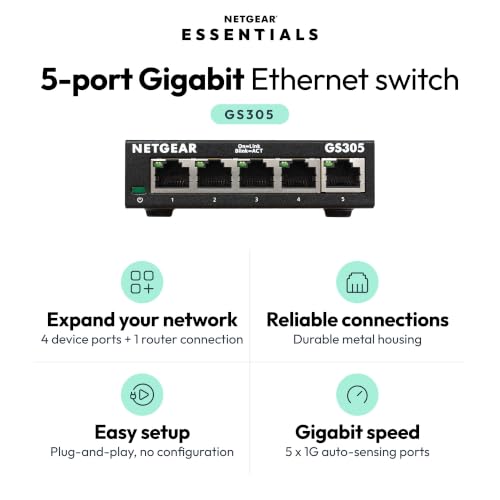
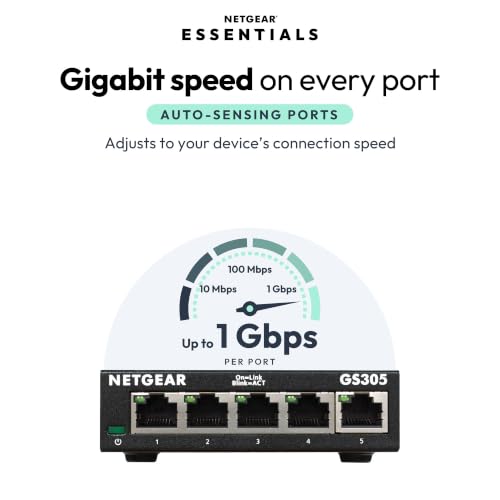
NETGEAR 5-Port Gigabit Ethernet Unmanaged Network Switch Plug & Play GS305 | Home & Office, 5 x 1G Ports, Reliable Wired Connection, Metal Case, Fanless & Silent, Compact, Desktop or Wall Mount




As an Amazon Associate we earn from qualifying purchases. Product prices and availability are accurate as of the date/time indicated.

WAVLINK 8-Port Gigabit Ethernet Unmanaged Switch, Home Network Hub, Office Ethernet Splitter, Plug & Play, Desktop/Wall Mount, Silent Operation, Metal Case
As an Amazon Associate we earn from qualifying purchases. Product prices and availability are accurate as of the date/time indicated.
Prices shown are approximate and for reference only. Prices change often, so please check the current price on Amazon before you buy.
Ports, speed, case, and provisions are each maker’s stated details for the current version and pattern; one port serves as the uplink to the router. Ratings are editorial for home networks: ports counted with margin, construction for a cabinet’s parish, silence and heat, lights and placement manners, and value and support across a decade.
Detailed Reviews: Best Unmanaged Switch for Home Networks Picks
1. NETGEAR GS108 – Best Overall
NETGEAR’s eight-port parish takes the overall rating as the household reference citizen in its line: a metal case’s manners in a cabinet, a decade’s reputation in the parish, and a front whose lights read at a glance, the disappearance doctrine in one grey box.
Installed and forgotten, correctly, it earns its place outright.
2. TP-Link TL-SG108-M2 – Best Fast Parish
TP-Link’s 2.5-gigabit parish serves the storage household in its line, its figure earned, in this guide’s honesty, only where a storage box and a computer both speak its language across modern wiring, and graded there as the genuine article.
For that household, it stands.
3. TP-Link TL-SG108 – Best Metal Parish
TP-Link’s gigabit citizen matches the overall row’s formula in its line at a friendlier figure, a metal parish and eight ports for the household whose counting ends there, its lights and its brick graded as this guide grades every citizen’s.
As the metal value, it earns its place.
4. TRENDnet TEG-S82g – Best Cabinet Parish
TRENDnet’s parish has served media cabinets in its line across a long record, its provisions and its case read in its maker’s terms, for the household whose switch lives warm and unseen and must simply never be heard from.
For the cabinet, it is soundly placed.
5. TP-Link TL-SG105 – Best Small Parish
TP-Link’s five-port citizen serves the small counted parish in its line, a desk’s or a television’s handful of wired citizens, bought, in this guide’s doctrine, only where the counting with its margin genuinely ends at five.
For that count, it is soundly placed.
6. NETGEAR GS305 – Best Value
NETGEAR’s five-port parish closes the table at the value’s figure in its line, for the second room’s citizen and the small parish alike, its decade’s service expected on the same terms as any row’s.
As the budget row, it completes the table.
Buying Guide: How to Choose the Best Unmanaged Switch for Home Networks
The Household’s Audit: The Count, the Speed’s Honesty, the Exile, and the Lights
Write the audit’s five facts before a listing is opened, walking the household with a notebook. The count: every device that belongs on a wire named, the router’s own ports entered in the same sum, the uplink’s tax deducted, two ports of margin added, the result being the switch’s size, five or eight for nearly every household, bought once at the counted figure rather than twice at the guessed one. The speed: gigabit as the working citizen, the faster parish bought only where a storage box and a computer both speak it and the wiring’s stated category carries it, the three facts checked in their documents rather than assumed from a listing’s headline. The bargain: unmanaged accepted knowingly, no separate networks and no power over its ports, a household needing either being directed to the parishes that provide them before money moves, not after. The exile: the cabinet or shelf the box will live in, its air and its stacking audited, a metal case for the warm parishes, its brick given the same air. And the lights, inside a returns window that contains an evening: every cable seated, every expected light present, each device’s own parish confirming its speed, a port that negotiates downward isolated by swapping its cable and its port in that order, because a network, like a zero in this site’s rifle guides, is a property evidenced, and an evening’s evidence is the whole of an unmanaged box’s commissioning. Order against the five, patch cables as rated citizens in the same order, and let a box that runs hot or speaks aloud in its parish be returned on that evidence.
Spend by the network’s priorities, which are the guide’s: the count first, with its margin, since a full switch is a scheduled replacement; construction second, for the exile it will serve; speed third, honestly, against the citizens that exist; the supply and its brick fourth, as part of the box; and a headline figure never, a speed no citizen speaks wearing a future’s clothes. Refuse, in the same pass, the parish’s two frauds: the port count bought exactly full, a margin refused to save a small figure against a decade’s tenancy, and the fast parish sold to a gigabit household, a figure spent on a language no device in the house can speak, because a network, like a range in this site’s guides, is graded by its ordinary evening, a film, a download, a backup at once, and that evening belongs, by doctrine, to a counted, silent box.
Keeping the Switch: Dust, Cables, and the Network’s Diary
Maintain the switch as an appliance citizen with a light liturgy, since its whole profession is to be forgotten safely. Its parish is dusted and its vents read at the season, a cabinet’s warmth re-audited when a new citizen joins the stack, its brick’s parish given the same glance. Its cables are married to their ports in the diary’s drawing rather than by labels that peel, each run’s device recorded, so a dark port in a future year is a sentence that can be read rather than a mystery to be solved by unplugging the household. A failure, when one comes, is isolated in the rehearsal’s order, cable, then port, then box, one change at a time, the cheapest citizen first, a doctrine this site prints for every system it troubleshoots.
Keep the record with the router’s papers, switch and its count, the drawing of its ports, the wiring’s stated categories where they were read, so a successor or a second citizen is bought from a diary. Do that, the ports counted, the case exiled kindly, the lights all present, and the best unmanaged switch for home networks becomes what its buyer wanted from the simplest citizen in the house: nothing at all, noticed never, a decade of evenings in which the wired world simply works, which is the highest praise an unmanaged parish can earn.
Frequently Asked Questions About the Best Unmanaged Switch for Home Networks
What is the best unmanaged switch for home networks?
NETGEAR’s GS108 parish overall, eight gigabit ports in a metal case with a decade’s manners, with TP-Link’s TL-SG108 the metal value, TP-Link’s M2 parish the fast row for a storage household whose citizens speak its language, TRENDnet’s citizen the cabinet’s, and the five-port rows from TP-Link and NETGEAR the small counted parishes. Fit yours by the household’s audit in this guide: your wired devices counted with the router’s own ports in the same sum, the uplink’s tax deducted and two ports of margin added; gigabit as the working speed, the faster parish only where a storage box, a computer, and the wiring’s stated category all support it; the unmanaged bargain accepted knowingly, no separate networks and no power over its ports; a metal case for a warm cabinet’s exile; and an evening’s rehearsal inside the returns window, every light present and every speed confirmed, because a switch is graded by its disappearance, and a disappearance is evidenced on the first evening.
How many ports do I need on a home switch?
As many as your counting produces, performed as this guide performs it rather than guessed from a listing’s sizes. Name every device that belongs on a wire, the television and its streaming citizens, a console, a desktop, a printer, a storage box, an access point’s feed, then add the router’s own spare ports to the estate, deduct one port on the switch and one on the router for the uplink that joins them, and add two ports of margin for the devices the next years will bring through the door. Most households land, honestly counted, on eight, which is why this table’s centre of gravity sits there; a genuinely small parish, a desk’s handful, lands on five and should buy five without apology; and a count that lands exactly on a size should buy the next size up, since a switch is a decade’s citizen and a full one is a replacement already scheduled. Write the count in the network’s diary with the drawing of its ports, so the household that inherits the cabinet can read the sentence you wrote.
Will a faster switch make my internet faster?
No, and the honest geography of a home’s speeds is this guide’s answer. A switch governs the journeys inside the house, device to device; the internet’s journey ends at the router, at the pace the broadband connection itself sets, a ceiling no switch raises, which is why a gigabit citizen serves nearly every household’s streaming, downloading, and ordinary storage traffic without ever being the bottleneck a listing implies. The faster parish earns its figure in one internal sentence only: large files moving between two citizens that both speak the faster language, a computer and a storage box above all, across wiring whose stated category carries it, a media library’s backup or an editor’s day’s footage, where the time genuinely halves in the owners’ parish. Audit your own household for that sentence before spending on it, in the devices’ own documents, and spend the difference, where the sentence is absent, on the count’s margin or the wiring’s citizens, which are the parishes a household’s ordinary evening actually grades.
Can I connect two unmanaged switches together?
Yes, as an ordinary sentence, a second citizen at the end of a long run being this guide’s own recommendation for a distant room rather than a thicket of cables. One port on each box is spent joining them, the same uplink tax as a router’s, the run between them a rated citizen seated with the usual care, and the household’s total estate is the sum of both boxes less the joining ports, counted in the audit as one network, which, unmanaged, it plainly is. Place the second citizen where its room’s wired devices gather, a television’s parish above all, give it the same air and the same glance at its lights, and draw both boxes in the network’s diary as one sentence. The cautions are the system’s own: no loop, a cable joining the boxes by two paths at once being a parish an unmanaged box cannot govern, each box joined to the network by exactly one road; and the joining run’s stated category read like any other’s, since the second room’s whole parish hangs from it exactly as the first switch hangs from its router.
Related guides
- Best Office Chair for Long Hours in 2026: 6 Office Chairs With Adjustable Lumbar, Adjustable Seat Height, Adjustable Armrests, and a Capacity of at Least 250 Pounds, for Long Hours, Without a Chair That Hurts Your Back, or a Chair That Is Too Small, for Long Hours
- Best Wireless Charger for Earbuds in 2026: How to Pick a Wireless Charger That Charges Your Earbud Case Fast, Safely, and Without Cables
- Best Monitor for Dual Screen Setup in 2026: Matched Pairs, Thin Bezels, and Daisy-Chaining Done Right
- Best Starter Tablet Keyboard Case Combo in 2026: Best Starter Tablet Keyboard Case Combo
More from Amazon
Programs that pair well with the guide above. Offers and eligibility are set by Amazon and may change.
Free shipping on eligible items, Prime Video and more. Eligible new members can start with a free trial.
Start a Prime free trialAd-free music streaming. Eligible new subscribers can start with a free trial.
Try Music Unlimited freeA Prime membership for ages 18-24 with a trial period. Eligibility is set by Amazon.
See Prime for Young AdultsAudiobooks and podcasts to listen to on the go. Eligible new members can start with a free trial.
Try Audible freeAs an Amazon Associate we earn from qualifying purchases.

Write Your Review
No reviews yet. Be the first to share your experience!