
What's inside
- How to Choose Router for Smart Homes: Quick Comparison Table
- What Does How to Choose Router for Smart Homes Mean?
- Best Routers for Smart Homes Reviewed
- Buying Guide: How to Choose Router for Smart Homes
- How to Set Up a Router for Smart Homes
- Which Router for Smart Homes Should You Buy?
- Frequently Asked Questions About How to Choose Router for Smart Homes
As an Amazon Associate I earn from qualifying purchases. This post may contain affiliate links at no extra cost to you.
Learning how to choose router for smart homes is the first step toward a home where lights, cameras, speakers, thermostats, locks, and televisions all stay connected at the same time. A good router for a smart home is not the free router from an internet provider. It is a real answer to how to choose router for smart homes, and the wrong choice can leave cameras offline, voice assistants unresponsive, and smart locks slow to react.
That setup can cover a smart home, it is reliable, and it is priced well for owners who want stable WiFi for dozens of connected gadgets.
At techymoon.com, we focus on tech gadgets. For this guide to how to choose router for smart homes in 2026, we compared current routers and mesh systems that are widely sold, designed for connected homes, and suitable for a household that wants to learn how to choose router for smart homes. We looked at WiFi standard, device capacity, coverage, and price. WiFi standard, device capacity, and coverage figures are manufacturer listings, and real performance depends on house size, wall materials, internet plan, and the number of active devices. Always check the router specs before you buy.
Our Top Picks
How to Choose Router for Smart Homes: Quick Comparison Table
The table below compares seven routers for smart homes. WiFi standard is the wireless standard, where given. Device capacity is the number of devices the manufacturer lists as supported, where given. Coverage is the coverage for the pack listed, where given. Best for is a note on what the router is best for, such as how to choose router for smart homes, where given.
| Router for Smart Homes | WiFi Standard | Device Capacity | Coverage | Best For |
|---|---|---|---|---|
| TP-Link Deco X55 Mesh WiFi System, 3-Pack | WiFi 6 | 150 devices | 6,500 sq ft | Best overall, how to choose router for smart homes |
| Google Nest Wifi Pro, 3-Pack | WiFi 6E | 100 devices | 6,600 sq ft | Best for Google, Nest Wifi Pro |
| Amazon eero 6+ Mesh WiFi System, 3-Pack | WiFi 6 | 75 devices | 4,500 sq ft | Best for Amazon, eero 6+ |
| Netgear Orbi RBK753 Mesh WiFi System, 3-Pack | WiFi 6 | 40 devices | 7,500 sq ft | Best for Netgear, Orbi RBK753 |
| ASUS ZenWiFi AX6600 XT8, 2-Pack | WiFi 6 | 100 devices | 5,500 sq ft | Best for ASUS, ZenWiFi AX6600 |
| TP-Link Archer AX55 WiFi 6 Router | WiFi 6 | 50 devices | 2,500 sq ft | Best for TP-Link, Archer AX55 |
| Amazon eero 6 Mesh WiFi Router, Single | WiFi 6 | 75 devices | 1,500 sq ft | Best budget, eero 6 Single |

ASUS RT-AX1800S Dual Band WiFi 6 Extendable Router, Subscription-Free Network Security, Parental Control, Built-in VPN, AiMesh Compatible, Gaming & Streaming, Smart Home
As an Amazon Associate we earn from qualifying purchases. Product prices and availability are accurate as of the date/time indicated.
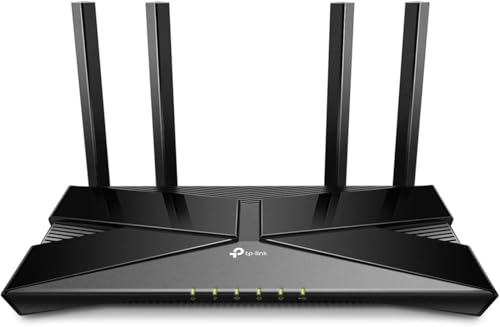
TP-Link Wifi 6 AX1500 Smart WiFi Router (Archer AX10) 802.11ax Router, Dual Band AX Router,Beamforming,OFDMA, MU-MIMO, Parental Controls, Works with Alexa (Renewed)
As an Amazon Associate we earn from qualifying purchases. Product prices and availability are accurate as of the date/time indicated.

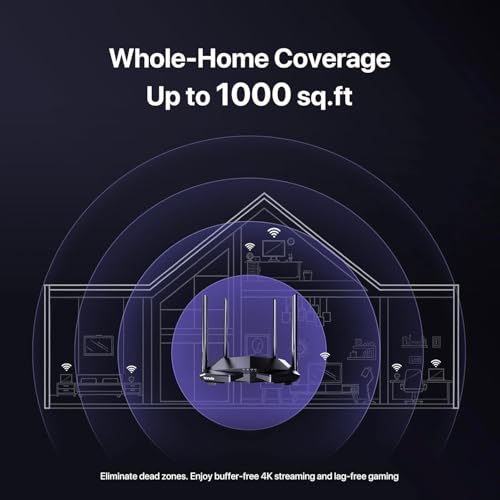
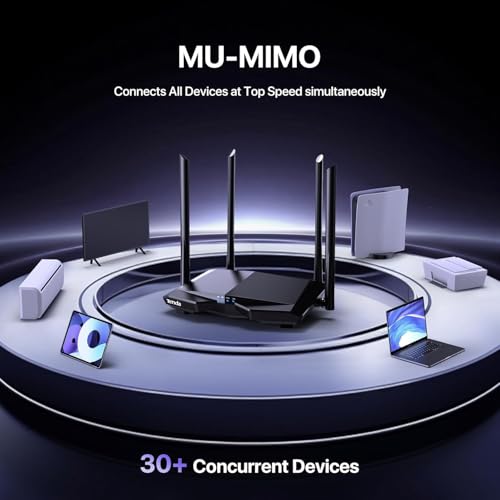
Tenda AC1200 Smart WiFi Router, High Speed Dual Band Wireless Internet Router with Smart APP, 4 x 100 Mbps Fast Ethernet Ports, Supports Guest WiFi, Access Point Mode, IPv6 and Parental Controls(AC6)



As an Amazon Associate we earn from qualifying purchases. Product prices and availability are accurate as of the date/time indicated.
Prices shown are approximate and for reference only. Prices change often, so please check the current price on Amazon before you buy.
Note: WiFi standard, device capacity, and coverage figures are manufacturer listings, and a system that lists 6,500 square feet may cover less in a house with thick walls or multiple floors, because coverage depends on layout, materials, and interference. Always check the router’s WiFi standard, device capacity, and coverage in the manual, and confirm the current price with the retailer. How to choose router for smart homes should start with counting devices, measuring the home, and checking the internet plan before buying.
What Does How to Choose Router for Smart Homes Mean?
It helps you connect, manage, and stabilise, without a router that is overloaded.
How to choose router for smart homes is different from choosing a router for a single laptop alone, which is for one or two devices, while a smart home router is for dozens of always-on devices. It is also different from choosing a gaming router alone, which is for low latency for one PC, while a smart home router is for steady coverage for the whole house.
How to choose router for smart homes is best for a household that uses smart lights, cameras, doorbells, thermostats, speakers, and televisions, wants a router, has a home with several rooms, and wants a simple, reliable answer to how to choose router for smart homes.
Best Routers for Smart Homes Reviewed
1. TP-Link Deco X55 Mesh WiFi System, 3-Pack – Best Router for Smart Homes Overall
It has a strong design, strong device handling, and a build that is made for smart homes.
TP-Link designs the Deco X55 with a focus on a system that is for smart homes and has a mesh design. The system is a good option for a household that wants TP-Link gear, and that wants the best overall design for how to choose router for smart homes.
The main limitation is Ethernet. The Deco X55 has gigabit ports, but no 2.5G port, though it is fast enough for most internet plans. Choose the Deco X55 if you want the best overall system, you want TP-Link, and you have a budget of $200 to $300.
2. Google Nest Wifi Pro, 3-Pack – Best Router for Smart Homes for Google Nest Wifi Pro
It has a good design, a good 6 GHz band, and a build that is made for smart homes.
Google designs the Nest Wifi Pro with a focus on a system that is for smart homes and has a simple app design. The system is a good option for a household that wants Google gear, and that wants a Nest Wifi Pro.
Choose the Nest Wifi Pro if you want Google, you want WiFi 6E, and you have a budget of $250 to $350.
3. Amazon eero 6+ Mesh WiFi System, 3-Pack – Best Router for Smart Homes for Amazon eero 6+
It has a good design, a good Alexa integration, and a build that is made for smart homes.
Amazon designs the eero 6+ with a focus on a system that is for smart homes and has an easy setup design. The system is a good option for a household that wants Amazon gear, and that wants an eero 6+.
The main limitation is subscription features. Some advanced security and parental controls need a paid eero Plus plan, though basic mesh and device management work without it. Choose the eero 6+ if you want Amazon, you want Alexa, and you have a budget of $200 to $300.
4. Netgear Orbi RBK753 Mesh WiFi System, 3-Pack – Best Router for Smart Homes for Netgear Orbi
It has a good design, a good dedicated backhaul, and a build that is made for smart homes.
Netgear designs the Orbi RBK753 with a focus on a system that is for smart homes and has a tri-band design. The system is a good option for a household that wants Netgear gear, and that wants an Orbi RBK753.
The main limitation is device count. At 40 devices, it lists fewer than the Deco X55, though its dedicated backhaul keeps speeds steady. Choose the Orbi RBK753 if you want Netgear, you want tri-band, and you have a budget of $300 to $400.
5. ASUS ZenWiFi AX6600 XT8, 2-Pack – Best Router for Smart Homes for ASUS ZenWiFi
It has a good design, a good AiMesh support, and a build that is made for smart homes.
ASUS designs the ZenWiFi AX6600 with a focus on a system that is for smart homes and has a flexible design. The system is a good option for a household that wants ASUS gear, and that wants a ZenWiFi AX6600.
Choose the ZenWiFi AX6600 if you want ASUS, you want AiMesh, and you have a budget of $250 to $350.
6. TP-Link Archer AX55 WiFi 6 Router – Best Router for Smart Homes for TP-Link Archer AX55
It has a good design, a good value, and a build that is made for smart homes.
TP-Link designs the Archer AX55 with a focus on a router that is for smart homes and has a single-router design. The router is a good option for a household that wants TP-Link gear, and that wants an Archer AX55.
The main limitation is coverage. At 2,500 square feet, it is good for flats and small houses, though it is not enough for a large multi-floor home. Choose the Archer AX55 if you want TP-Link, you want value, and you have a budget of $100 to $150.
7. Amazon eero 6 Mesh WiFi Router, Single – Best Budget Router for Smart Homes
It has a low price, a good design, and a build that is made for smart homes.
Amazon designs the eero 6 Single with a focus on a router that is affordable and has a simple design. The router is a good option for a household that wants Amazon gear, and that wants an eero 6.
Choose the eero 6 Single if you want a low price router, you want Amazon, and you have a budget of $80 to $120, and add nodes later if the home needs more coverage.
Buying Guide: How to Choose Router for Smart Homes
Before you buy, think about how many smart devices you own, whether it is 20 or 100, how large your home is, whether it is 1,500 or 6,500 square feet, what WiFi standard you need, whether it is WiFi 6 or WiFi 6E, what internet speed you pay for, whether it is 200 Mbps or gigabit, and how much you want to spend. A router that is perfect for a flat may be too weak for a three-floor house, and a router that is perfect for a large house may be too expensive for a small flat.
1. Count Your Devices: 25, 50, or 100 Smart Devices, and Your Network Load
Counting devices is the first decision. Counting devices is how you avoid buying a router that is overloaded, usually 25 devices for a light smart home, while 75 to 150 is for a heavy smart home. A household often buys a basic router for 10 devices and finds cameras and speakers disconnect when more devices join.
Count every connected gadget, including lights, plugs, cameras, doorbells, thermostats, speakers, televisions, phones, tablets, and laptops. Add 20 percent headroom for guests and future purchases. Choose 50 devices if you have a small smart home, 75 to 100 if you have cameras and many lights, and 150 if you have a large home with sensors in every room. For most smart homes, a router that lists support for at least 75 devices is a safer starting point than one that lists 25.
2. Mesh vs Single Router: Coverage, Walls, and Your Home Layout
Mesh versus single router is the second decision. Mesh is a system with two or three nodes that share one network name, while a single router is one box in one place. A household often buys a single powerful router for a large house and finds the far bedroom has one bar of signal.
Choose a single router if your home is under 2,000 square feet, has an open layout, and you have a budget of $80 to $150. Choose a 2-pack mesh if your home is 2,000 to 4,500 square feet or has two floors, and a 3-pack mesh if your home is 4,500 to 7,500 square feet, has three floors, or has thick brick and concrete walls. Place nodes in open areas, about one or two rooms apart, and avoid putting them inside cabinets or behind televisions. For most smart homes over 2,500 square feet, mesh is the more reliable choice.
3. WiFi 6 vs WiFi 6E vs WiFi 7: Bands, Speed, and Your Devices
WiFi standard is the third decision. WiFi standard is what wireless bands and speeds your router supports, usually WiFi 6 for most smart homes, while WiFi 6E adds a 6 GHz band, and WiFi 7 adds faster speeds and lower latency for newer devices. A household often buys WiFi 6E and finds most of its smart lights and cameras still use 2.4 GHz.
Choose WiFi 6 if you want the best value, you have a mix of older and newer devices, or you have a budget of $80 to $300. Choose WiFi 6E if you want less congestion for newer phones and laptops, you live in a dense apartment building, or you have a budget of $250 to $350. Most smart home devices use 2.4 GHz because it travels further through walls, so a router with strong 2.4 GHz performance matters more than the newest standard alone. For most smart homes in 2026, WiFi 6 mesh is enough, and WiFi 6E is a useful upgrade for households with many high-speed devices.
4. The 2.4 GHz Band: Smart Lights, Cameras, and Your Range
The 2.4 GHz band is the fourth decision. The 2.4 GHz band is the slower, longer-range band that most smart home devices use, while 5 GHz is faster but shorter-range, and 6 GHz is fastest but shortest-range. A household often turns off 2.4 GHz to speed up WiFi and finds smart plugs and bulbs cannot connect.
Keep 2.4 GHz enabled, and check that your router lets smart devices join it during setup. Some routers use band steering to move devices automatically, which can confuse older gadgets. If a device will not connect, temporarily use a separate 2.4 GHz network name during setup, then switch back if needed. Place the main router near the centre of the home, not in a basement corner, so the 2.4 GHz signal reaches doorbells and outdoor cameras. For most smart homes, a stable 2.4 GHz band is more important than peak 5 GHz speed.
5. Security and Controls: Guest Networks, Updates, and Your Privacy
Security and controls is the fifth decision. Security is how your router protects smart devices, usually automatic updates for patches, while a guest network is for visitors and a separate network for smart devices is for isolation. A household often puts every device on the main network and finds a compromised camera can reach a laptop.
Choose a router with automatic firmware updates, WPA3 where supported, and a guest network. Put visitors on the guest network, and consider a separate network for cameras and locks if your router supports it. Use parental controls to set bedtimes for children’s devices, and check the app monthly for unknown devices. Change the default admin password, and use a strong WiFi password. For most smart homes, a router with a clear app, automatic updates, and device lists is easier to keep secure than a router with hidden settings.
6. Price, Internet Plan, and Choosing a Router for Smart Homes on a Budget
Consider total cost as well as price. Check your internet plan first, because a gigabit router will not make a 200 Mbps plan faster. Do not buy the cheapest router if it drops smart cameras, and do not buy the most expensive system if your home is small and your device count is low. A router that matches your device count, your home size, and your budget will work better than a router that is cheap but overloaded, or expensive but oversized for how to choose router for smart homes.
How to Set Up a Router for Smart Homes
Setting up a router for smart homes starts with placing the main node near the centre of the home, connecting it to the modem, and using the app to create the WiFi network. Use a TP-Link Deco X55 or Google Nest Wifi Pro, and place satellite nodes halfway between the main router and the far rooms.
For a first setup, use an Amazon eero 6+ or TP-Link Archer AX55, connect smart devices one room at a time, and test cameras and doorbells from the farthest point. If a camera drops offline, move a node closer, and if a light will not pair, check that 2.4 GHz is enabled. Always update firmware after setup, and write down the network name and password in a safe place.
Which Router for Smart Homes Should You Buy?
If you want the best router for smart homes, buy the TP-Link Deco X55 Mesh WiFi System, 3-Pack.
If you want Google, buy the Google Nest Wifi Pro, 3-Pack. If you want Amazon eero 6+, buy the Amazon eero 6+ Mesh WiFi System, 3-Pack. If you want Netgear Orbi, buy the Netgear Orbi RBK753 Mesh WiFi System, 3-Pack. If you want ASUS, buy the ASUS ZenWiFi AX6600 XT8, 2-Pack. If you want a single TP-Link router, buy the TP-Link Archer AX55 WiFi 6 Router. If you want the best budget, buy the Amazon eero 6 Mesh WiFi Router, Single.
All seven routers in this guide are currently sold, designed for connected homes, and suitable for a household that wants to learn how to choose router for smart homes. Pick the one that matches your device count, whether it is 150 devices, your home size, and your budget, and always test coverage in the farthest room before you finish setup.
Disclosure: techymoon.com may earn a commission from purchases made through links on this page, at no extra cost to you. WiFi standard, device capacity, and coverage figures are manufacturer claims and can vary by model, home layout, and use.
Frequently Asked Questions About How to Choose Router for Smart Homes
How many devices can a smart home router handle?
Count lights, cameras, plugs, speakers, and phones, then choose a router with headroom for future devices.
Do I need a mesh system for a smart home?
Choose mesh for large or multi-floor homes, and a single router for flats and small houses.
Is WiFi 6 enough for a smart home in 2026?
Most smart devices use 2.4 GHz and need stability more than peak speed, so WiFi 6E is useful mainly for newer phones, laptops, and crowded apartments.
What is the best budget router for smart homes?
Choose eero 6 if you want a mesh starter that can grow, and Archer AX55 if you want a stronger single router for a small home.
Related guides
- Best Cheap Memory Card Reader Under 30 in 2026: 6 Fast, Reliable Readers for SD and microSD
- Gaming Monitor vs Office Monitor for Work in 2026: 3 Gaming Monitors and 3 Office Monitors Compared for Work, With Refresh Rate, Resolution, and a Price Range
- Best Flatbed Scanner vs Document Scanner for Offices in 2026: Which Scanner Is Best for Your Office?
- Best Cheap Laptop Stand for Students in 2026: Best Cheap Laptop Stand for Students for Good Posture, Easy Study, and Simple Desk Use
More from Amazon
Programs that pair well with the guide above. Offers and eligibility are set by Amazon and may change.
Free shipping on eligible items, Prime Video and more. Eligible new members can start with a free trial.
Start a Prime free trialAd-free music streaming. Eligible new subscribers can start with a free trial.
Try Music Unlimited freeA Prime membership for ages 18-24 with a trial period. Eligibility is set by Amazon.
See Prime for Young AdultsAudiobooks and podcasts to listen to on the go. Eligible new members can start with a free trial.
Try Audible freeAs an Amazon Associate we earn from qualifying purchases.

Write Your Review
No reviews yet. Be the first to share your experience!