
What's inside
- Best Braided Cable vs Rubber Cable for Durability: Where Cables Actually Fail
- Best Braided Cable vs Rubber Cable for Durability: Quick Comparison
- The Six Durability Cables Reviewed
- Buying Guide: How to Choose Between Braided and Rubber Cables for Durability
- Frequently Asked Questions About Braided vs Rubber Cable Durability
As an Amazon Associate I earn from qualifying purchases. This post may contain affiliate links at no extra cost to you.
The best braided cable vs rubber cable for durability debate is usually argued from photographs, the braided cable looking armored and the rubber one looking plain, while the cables themselves die, almost without exception, in the same place: not along the jacket at all, but at the strain relief behind the connector, where a thousand bends concentrate into one tired inch of copper. That fact organizes this entire guide. Jacket material genuinely matters, braided nylon resists abrasion, cuts, and chewing in ways rubber cannot, while quality rubber and silicone jackets flex more supplely, coil without memory, and resist the fraying that ends a braid’s looks, but the jacket is the second variable. The first is the termination, the connector’s build and the strain relief’s length and taper, and the third is the owner’s habits, which no jacket survives if they include yanking by the cord and crushing coils under a bag’s full weight. This guide compares the two materials honestly, puts six real, currently sold cables, braided champions and rubber and silicone champions, in one table graded for durability, and teaches the buying and handling protocol that makes either material outlast the phone it charges.
Define durability before the table, because the word smuggles three different promises. Abrasion durability is the jacket’s resistance to rubbing, dragging, edges, zippers, and teeth, and it is the braided cable’s home ground. Flex durability is survival through bending cycles, at the connector above all, and it belongs to whichever cable, of either material, has the better strain relief and the more forgiving bend radius, with supple silicone jackets holding a genuine edge in cold weather, when rubber stiffens and cheap braid turns wiry. And chemical durability, the resistance to the oils, sweat, sunlight, and cleaning products of a cable’s life, is where cheap rubber quietly fails, its jacket turning tacky or cracking in a year, while quality compounds and nylon braid shrug the same exposure off. A cable purchase made on one axis and used on another is the category’s standard disappointment, so the reviews grade all three, and the buying guide begins by asking which death your last three cables actually died.
Our Top Picks
Best Braided Cable vs Rubber Cable for Durability: Where Cables Actually Fail
The Strain Relief Is the Battlefield
Open a dead cable’s history and the pattern is monotonous: the jacket is intact along its length, and the failure hides in the two inches behind the plug, where the cable exits the connector and bends every time the phone is picked up while charging, the cord is draped off a desk’s edge, or the coil is wound tight for a bag. Inside, the fine conductors fatigue and part one strand at a time, which is why dying cables charge at angles, work when held just so, and finally quit in the position they were loved in most. Manufacturers fight this with strain relief design, a long, tapered boot that spreads the bend over inches instead of a point, internal reinforcement where the conductors meet the solder joints, and bend-lifespan ratings earned on machines that flex the termination tens of thousands of times. Those ratings, where a maker publishes them, are the single most predictive durability number on a cable’s page, ahead of every jacket photograph, and the table’s rows are graded with their termination designs weighted accordingly. The corollary for owners is free and immediate: a cable of either material, unplugged by its connector and never bent sharply at the boot, will outlive a premium cable abused at exactly that inch.
Braided Nylon: Armor Against the World, With Two Honest Weaknesses
The braid’s case is abrasion, and it is not close. A woven nylon jacket slides over desk edges, resists the zipper’s teeth and the car door’s pinch, shrugs off the cat and the toddler, and keeps a cable presentable in the public places, the office, the travel kit, the charging station, where rubber jackets scuff, nick, and eventually split at the insult that the braid treats as weather. Braided cables also resist the slow fray of being dragged across rough surfaces daily, the commuter’s and the field worker’s reality. The weaknesses are two and specific. A braid can itself fray when a filament catches and pulls, and a frayed braid is cosmetic ruin that cannot be repaired, only trimmed and lived with. And a stiff, tightly woven braid holds coil memory and transmits its springiness to the desk, where it wrestles the phone and refuses to lie where it was put, a daily annoyance that the supple-jacket owners never meet. Braid quality varies enormously with the weave’s density and the jacket beneath it, which is why this table’s braided rows are the established makers’ rather than the marketplace’s cheapest, whose braid is a costume over the same fragile core as everything else at its price.
Rubber and Silicone: Suppleness as a Durability Strategy
The rubber family’s case is flex and feel, argued by its best modern member, silicone. A quality silicone jacket bends without a memory, coils into a pocket or a palm, stays supple in a cold car where PVC rubber stiffens into a cracking risk, and presents a surface that grips a desk instead of skating off it, which is a durability feature disguised as a convenience, since cables that stay where they are put get stepped on and yanked less. Silicone’s abrasion resistance is its honest deficit against braid, a dragged silicone jacket scuffs and can nick on a sharp edge, and its dust-and-lint attraction is a cosmetic tax its owners know well. Traditional rubber and TPE jackets span a quality canyon: the premium compounds in this table flex for years without the tackiness and cracking of the cheap PVC that gave rubber its reputation, and the buying guide’s rule follows, that in rubber the maker’s name is the specification, while in braid the weave’s density can at least be seen. Neither material wins the category; each wins a failure mode, and the buyer’s last three dead cables, as promised, cast the deciding vote.
Best Braided Cable vs Rubber Cable for Durability: Quick Comparison
| Cable Model | Jacket Type | Key Specs | Best For | Typical Price Range | Rating |
|---|---|---|---|---|---|
| Anker PowerLine III Flow USB-C | Silicone (rubber family) | 100W class charging, tangle-free supple jacket, long strain reliefs in class, multiple lengths and colors | Best braided cable vs rubber cable for durability overall, flex champion | $15 – $25 | 4.7 / 5 |
| Anker 765 USB-C to USB-C (Nylon) | Braided nylon | 140W class charging, dense double braid positioning, reinforced terminations in class | Best braided for abrasion and power | $18 – $28 | 4.6 / 5 |
| Belkin BoostCharge Pro Flex | Silicone (rubber family) | USB-C and Lightning versions in line, supple jacket, magnetic cable management in class | Best silicone for desk and travel | $15 – $25 | 4.5 / 5 |
| Anker 643 / PowerLine Flow class variants | Silicone (rubber family) | Mid-power class, colors and lengths range, same Flow jacket family | Best colorful everyday cable | $13 – $20 | 4.4 / 5 |
| UGREEN Uno / Nexode Braided USB-C | Braided nylon | 100W class charging, value pricing, braided jacket, compact connectors | Best braided value | $10 – $16 | 4.3 / 5 |
| Apple USB-C Charge Cable (braided, MagSafe line class) | Braided nylon | Woven jacket on current Apple cables in class, USB-C charging, first-party fit and finish | Best first-party braided | $19 – $29 | 4.3 / 5 |

CELYND Stainless Steel Cable for Railing - 500FT 1/8" T316 Wire Rope Cable | 7x7 Strands with Cutter for Deck Railings System Kit
As an Amazon Associate we earn from qualifying purchases. Product prices and availability are accurate as of the date/time indicated.

SIDAZON 1/16 inch Stainless Steel Wire Cable,100FT,Aircraft Cable Wire Rope Marine Grade, Length 7x7 Strand Core with Aluminum Sleeves and Thimbles

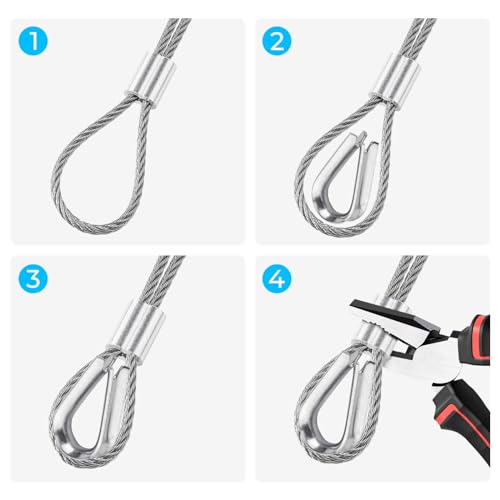



As an Amazon Associate we earn from qualifying purchases. Product prices and availability are accurate as of the date/time indicated.

AFences 1/8 Inch Stainless Steel Cable 100FT - 7x7 Strand Aircraft Wire Rope with Loop Sleeve & Thimble - Heavy Duty for Deck Railing, String Light Hanging, Garden, Marine, DIY Projects


As an Amazon Associate we earn from qualifying purchases. Product prices and availability are accurate as of the date/time indicated.
Prices shown are approximate and for reference only. Prices change often, so please check the current price on Amazon before you buy.
Charging wattage classes and construction summarize manufacturers’ published information for current versions; USB-C cables also carry data at the rates their product pages state. Ratings are editorial, weighing termination design, jacket performance on its axis, flex and abrasion balance, and value.
The Six Durability Cables Reviewed
1. Anker PowerLine III Flow: Best Overall, the Silicone Case
The Flow is the cable that converted a generation of braid loyalists, by attacking the failure that actually kills cables: a silicone jacket of unusual suppleness over terminations built for the bend, rated by its maker in the tens of thousands of flexes, in a design that coils into a knot-free loop, slides out of a bag untangled, and lies on a desk like it was poured there. Its abrasion ceiling is silicone’s, below the braid’s, and its surface collects the lint its owners forgive it weekly. Its charging is the full modern class, its lengths and colors suit every station in a house, and its survival record in the two places cables live hardest, the bedside and the travel kit, is the strongest argument in this article that flex durability, honestly engineered, beats armor honestly marketed. It takes the top row as the best single answer for the most owners.
2. Anker 765 Nylon: Best Braided
The 765 is the braid’s best advocate: a dense double-woven nylon jacket over a core built for the 140 watt class, terminations reinforced to match, in a cable that treats desk edges, bag zippers, and the household pet as weather. It is stiffer than the Flow, as its material insists, holding its coils and announcing its presence on the desk, and its braid, if snagged hard, can fray where silicone would only scuff. For the commuter, the workshop, the car, and every station where the cable is dragged, dropped, and wound by hands in a hurry, it is the correct armor, and its power class future-proofs it through the next laptop as well. The braid buyer who wants the material’s best expression rather than its cheapest costume starts here.
3. Belkin BoostCharge Pro Flex: Best Silicone Alternative
Belkin’s Pro Flex line brings the silicone argument with a first-party polish: a supple, tangle-resistant jacket, terminations in the durable class, a magnetic tidying touch in its design family, and versions spanning USB-C and, for the older Apple devices still in service, Lightning, which the Flow’s USB-C world leaves behind. Its premium over the value rows buys Belkin’s support and retail presence, and its flex manners equal the leader’s in daily use. For the household standardizing on silicone across two connector generations, it is the coherent purchase, and its desk behavior, flat, grippy, unobtrusive, is the rubber family’s whole philosophy in one cable.
4. Anker Flow Class Variants: Best Everyday Colors and Lengths
The wider Flow family, the mid-power variants and the length and color range around the flagship, earns its own row for a practical reason: a household’s cables die at different stations, and the Flow family’s consistency lets the buyer match the jacket and the feel across the bedside, the couch, and the car, at power classes priced for their jobs. The shorter lengths tame the desk, the longer ones free the couch’s far end, and the colors end the household’s cable custody disputes by assignment. Durability across the family is the flagship’s design at each power class, which is the point: buy the family’s member sized to the station, and the durability doctrine in this guide applies uniformly, a small system, like everything else this site recommends.
5. UGREEN Braided USB-C: Best Braided Value
UGREEN’s braided cables are the value braid done responsibly: a genuine woven jacket, 100 watt class charging, compact connector housings that fit cased phones, and a price that makes the two-cable purchase, one for the bag and one for the desk, a single decision. Its terminations and weave are a class below the 765’s armor, and its long-term fray behavior will show it, but within the honest middle it outlasts the unbranded braid whose weave is a photograph’s promise. For the buyer equipping several stations on a budget, it is the row that respects both the wallet and the doctrine, since five good cables in five places will always outlast one great cable dragged between them.
6. Apple Braided USB-C Cables: Best First-Party
Apple’s move to woven jackets on its current charge cables quietly settled the material debate in the first-party world: the braid arrived for abrasion and presentability, and the cables’ terminations, historically the family’s criticized inch, improved with the redesign’s generation. The Apple rows cost the first-party premium and return the first-party certainties, exact fit, full compatibility with the ecosystem’s charging behaviors, and a warranty conversation with the company that made the phone. They are not the table’s value leaders and do not pretend to be; they are the correct purchase for the owner who wants the cable question closed by the same name as the device, and their braided construction means that name now closes it durably.
Buying Guide: How to Choose Between Braided and Rubber Cables for Durability
Step One: Autopsy Your Last Cables and Buy Against Their Death
Lay out your last three dead or dying cables and read them. Failures at the connector, charging at an angle, a boot split or a conductor gone intermittent, indict flex and termination, and your next cable is a long-strain-relief design in either material, with silicone’s suppleness the tiebreaker. Jackets nicked, cut, scuffed through, or chewed along their length indict abrasion, and your next cable is a dense braid from the table’s armored rows. Jackets turned tacky, stiff, or cracked in a drawer indict cheap compound, and your next cable is a named maker’s anything, since the failure was not the material family but its cheapest member. This autopsy takes two minutes and outperforms every generic recommendation, including this guide’s top row, because durability is not a property of a cable; it is a match between a cable and a life, and your dead cables are the only witnesses who know yours.
Step Two: Verify the Unphotogenic Specifications
Read past the jacket to the numbers that predict survival: a published bend or flex lifespan, where offered, in the tens of thousands for the serious class; the charging class your devices actually use, 100 watts covering nearly every phone and most laptops, with the cable’s e-marker present in the higher classes as the standard requires; data speed stated honestly, most charge cables moving data at USB 2 rates, which is fine for charging duty and a disappointment only to the buyer who assumed otherwise; and length bought for the station, since excess cable is excess coil, excess drag, and excess bend, all spent against the cable’s life. Check the connector housing’s fit against your phone’s case while you are at it, because a cable that must be forced past a case’s port is a cable being bent at its boot twice a day by design, yours.
Step Three: Handle the Winner Like It Matters, Because It Does
Whichever material you buy, the handling protocol is the same and it is worth more than the jacket: unplug by the connector, never by the cord; coil loosely in the over-under wrap that leaves no twist’s memory; keep the bend at the boot gentle, routing the cable so the phone in use does not hang its weight from the termination; keep cables out of the car door’s path, the chair caster’s lane, and the drawer that closes on them; and retire a cable at the first intermittent behavior rather than nursing it through a season of angle-hunting, since a failing cable’s last trick is sometimes heat at the damaged inch. Keep the dead simple system this site always lands on: one good cable per station, bought by the autopsy, handled by the protocol, replaced without archaeology when its time comes. The braided versus rubber question, answered this way, dissolves into what it always was, a preference between two good materials, sitting on top of the decisions that were actually deciding your cables’ lives.
Frequently Asked Questions About Braided vs Rubber Cable Durability
Are braided cables actually more durable than rubber cables?
Against abrasion, cuts, and chewing, yes, clearly, and against the failure that kills most cables, flex fatigue at the connector, not inherently at all. A dense nylon braid is armor for the jacket’s length, and a cable whose life is dragging, zipping, and pet exposure should wear it. But the termination’s design and the jacket’s suppleness decide the bend survival that dominates real mortality statistics, and there a premium silicone cable with long strain reliefs will outlive a cheap braided cable whose braid is decoration over a fragile boot, a pairing the marketplace offers at every price. The honest summary this guide has built toward is that material chooses which abuse you are armored against, build quality chooses whether the armor matters, and handling chooses how much armor you needed. Buy the braid for the abrasive life, the silicone for the flexing life, a named maker for either, and the debate resolves into your own history with cables, which was the answer all along.
Why do my cables always break right behind the plug?
Because that inch does all the bending. Along the cable’s length a bend spreads over inches of jacket; at the connector, the rigid plug ends and the flexible cable begins, and every flex concentrates at that junction, fatiguing the fine conductors strand by strand until the cable charges only at certain angles and then not at all. The strain relief, the tapered boot behind the plug, exists to spread that bend, which is why its length and taper are this guide’s most weighted specification and why the cheapest cables, whose boots are short decorative ridges, die there fastest regardless of jacket. Your habits hold the other half of the answer: picking the phone up by a charging cable, letting the device hang from the cord, winding the coil tight from the plug, all spend that inch’s life directly. A better boot and a gentler hand are the whole cure, and between them they are worth more than any jacket ever woven or poured.
Do braided cables charge faster than rubber cables?
No, because the jacket has nothing to do with the electricity. Charging speed is set by the cable’s internal conductors and electronics, its wattage class and, in USB-C’s higher ranges, its e-marker chip, together with the charger and the device negotiating their protocol; data speed is likewise a property of the cable’s wiring standard, not its clothing. A braided cable and a silicone cable of the same class charge identically, and a bargain cable of either material rated below your charger’s output will bottleneck it identically too. Where the confusion is born is correlation: premium cables tend to be both better jacketed and better wired, so the braid becomes the visible sign of an invisible quality. Buy by the wattage class and the maker’s name, choose the jacket by your abrasion and flex needs, and never let a photograph of a weave substitute for a specification, in cables or in anything else this site reviews.
How long should a good charging cable last, and when should I replace it?
A quality cable from this table, handled by the guide’s protocol, should serve for years, through the phone it was bought for and into the next, and the makers’ bend ratings in the tens of thousands of flexes translate, at a few bends a day, to a working life measured in phone generations. Replace a cable when it shows the failure’s early script: charging that depends on the cable’s position, visible conductor or a jacket split through to the inner layers, a connector that runs warm, a boot cracked open, or data connections that drop when the cable moves. Do not nurse a cable past those signs, because a damaged cable’s risks, heat at the break and a short at the port, are spent against devices worth a hundred cables. And when you replace it, perform this guide’s autopsy on the old one before choosing the new, since the corpse on the desk knows more about your next purchase than any review, including this one, ever will.
Related guides
- Best Cheap Memory Card Reader Under 30 in 2026: 6 Fast, Reliable Readers for SD and microSD
- Gaming Monitor vs Office Monitor for Work in 2026: 3 Gaming Monitors and 3 Office Monitors Compared for Work, With Refresh Rate, Resolution, and a Price Range
- Best Flatbed Scanner vs Document Scanner for Offices in 2026: Which Scanner Is Best for Your Office?
- Best Cheap Laptop Stand for Students in 2026: Best Cheap Laptop Stand for Students for Good Posture, Easy Study, and Simple Desk Use
More from Amazon
Programs that pair well with the guide above. Offers and eligibility are set by Amazon and may change.
Free shipping on eligible items, Prime Video and more. Eligible new members can start with a free trial.
Start a Prime free trialAd-free music streaming. Eligible new subscribers can start with a free trial.
Try Music Unlimited freeA Prime membership for ages 18-24 with a trial period. Eligibility is set by Amazon.
See Prime for Young AdultsAudiobooks and podcasts to listen to on the go. Eligible new members can start with a free trial.
Try Audible freeAs an Amazon Associate we earn from qualifying purchases.

Write Your Review
No reviews yet. Be the first to share your experience!