
What's inside
- Best Action Camera for Surfing: Stabilisation for the Barrel, Frame Rates for the Slow Motion, Doors You Can Open With Wet Hands
- Quick Comparison: Action Cameras for Surfing Compared
- The Six Surf Cameras Reviewed
- Buying Guide: Choose the Mount’s Film First, Buy the Float With the Camera, Rehearse the Seals
- How We Selected These Surf Cameras
- Frequently Asked Questions: Action Cameras for Surfing
As an Amazon Associate I earn from qualifying purchases. This post may contain affiliate links at no extra cost to you.
The best action camera for surfing is bought in the surf’s own currency, which is survival: the wave that closes out on the camera, the board that meets it in the whitewater, the leash tangle, the drop from a wet hand onto the reef-side rocks, the hour of salt and sand that follows every session as surely as the tide. A surfing camera is therefore graded in this guide first as a piece of marine equipment and only then as a camera: waterproof in its own body to the parish the surf composes, which for most surfers means the board and the body rather than the deep; stabilised, because surf footage is shot from the least stable platform in sport; mounted by citizens that hold in a wipeout and tethered by a second parish that assumes the first will fail; and simple enough to start with a wet thumb while a set is approaching, because the wave of the day does not wait for a menu. The image figures follow in their order: the resolution and frame parish that slow motion is made of, the field of view that composes a barrel or a face, and the battery parish that must cover a session rather than a specification sheet.
The waterproof figure deserves its careful reading, because it is the category’s most quoted and least understood. The makers state a depth for the bare body, composed in still, clean water under laboratory manners, and the surf is none of those things: it is moving water with force in it, sand in suspension, and impacts that compose pressures a still depth never rehearses. The composed surfer therefore reads the bare-body rating as the parish for the ordinary session, the board-mounted and body-worn work of a normal day, and composes the housing parish for the rest: the dive and surf housings the makers sell for their own cameras, which add the impact parish and the depth margin, and which this guide recommends without hesitation for the heavy days, the reef breaks, and the camera that represents a season’s savings. Whichever parish is chosen, the seals are the specification: the doors and their gaskets inspected before every session with the sand brushed out by hand, because one grain in the wrong parish is the difference between a waterproof camera and a former camera, and the rinse in fresh water after every salt session is the keeping doctrine that the whole parish stands on.
The tether is the second doctrine and it is absolute: every camera that enters the surf is attached to something that floats or to someone who does, by two parishes where the water is serious. The mount is the first, board, mouth, chest, or wrist, each composed for its footage and each audited in this guide. The tether is the second, a cord or leash parish to the wrist, the board, or the body, with the float citizen, the buoyant back or handle that brings a lost camera to the surface and keeps it there in a colour the eye can find, because a camera that sinks in the surf is not lost equipment but litter with a memory card, and the ocean declines both. Buy the float and the tether in the same order as the camera, from the same basket, as step two of the buying guide insists, because the session does not send a reminder.
Our Top Picks
Best Action Camera for Surfing: Stabilisation for the Barrel, Frame Rates for the Slow Motion, Doors You Can Open With Wet Hands
Image and Stabilisation for the Best Action Camera for Surfing
Surf footage lives or dies on stabilisation, because its platforms are a board planing over chop, a body duck-diving, a head turning to read the wave, and the raw parish of any of them is unwatchable at any resolution. The current generation’s electronic stabilisation, in the senior citizens of this table, composes that chaos into footage that looks as though the sea were calm and the surfer were the still point, and it is the single figure that separates the present parish from everything before it. Grade it by its maker’s current system and by its behaviour at the frame parish you will shoot, because stabilisation and frame rate compose together: the high frame parishes, the 100 and 120 and beyond in the makers’ stated figures for their modes, are the slow-motion parish, the barrel and the turn replayed at the speed where technique becomes visible, and they are the surfing camera’s signature luxury. Resolution follows: the senior parish’s high figures compose the reframing and the crop, the wide shot mined for the close one in the edit, while the honest middle parish, shot well and stabilised, composes footage the family and the followers will never distinguish from it. Field of view is the surfer’s own composition: the wide parish for the board-mounted and barrel work, where the wave must be in the frame with the rider; the narrower, linear parish for the face and the shore-side work, where the wide citizen’s curved horizon argues with the eye.
The session’s practical figures complete the image audit. Battery life is read at the parish of use, the high frame modes and the cold morning offshore composing a smaller figure than the headline’s, and the composed surfer carries the spare in the dry parish and swaps it on the beach with dry hands, since a battery door opened with sandy fingers at the waterline is the seal doctrine violated in the act of obeying the battery one. Voice control and the big, wet-friendly button parish are not luxuries in the surf but the controls themselves, the camera started by a shout or a single press while both hands are otherwise employed by the ocean. The screen’s parish is read for the beach rather than the water, bright enough to review the session’s best wave on the sand. And the app and transfer parish, by which the footage leaves the camera for the phone, should be composed once at home, because the surfer who fights the pairing in the car park will, by the third session, simply stop filming, and the finest camera in this table is the one that is used.
Mounts and Their Parishes for the Best Action Camera for Surfing
Each mount composes a different film, and the surfer’s parish is usually a progression through them. The board mount, adhesive on the nose or the tail in its surf-specific parish, composes the classic citizen: the rider’s own view of the wave, or the wave’s view of the rider from the nose, and it is the mount whose adhesion doctrine is a specification, the pad composed for surf, the surface cleaned and the cure given its hours as the maker directs, because a board mount that leaves in the first wipeout takes the camera’s tether parish with it. The mouth mount composes the hands-free parish, the camera held as a snorkel’s mouthpiece holds, giving the paddling view and the surfer’s own line through the wave, at the price of a jaw that has opinions by the hour’s end. The chest and shoulder parishes compose the stable, body-referenced film, the arms and the board in frame. The wrist and hand parishes compose the swimmer’s and the bodyboarder’s citizen and the quick, aimed shot. And the shore parish, the camera on its small tripod in a friend’s hands or composed on the beach, remains the finest footage of all for the surfer who wants to see their own surfing whole, which is the view that actually improves it.
Every mount in every parish obeys the tether doctrine of this guide’s opening, restated here as a specification: a secondary cord from the camera to the board, the wrist, or the body, composed to survive the mount’s failure; a float citizen on the camera or its housing wherever the water is over the head; and the whole parish inspected at the session’s start with a tug that means it. The mounts’ small citizens matter in the same proportion: the thumbscrews that a wet hand can govern, the buckles that rinse clean, the adhesive spares in the kit for the board that changes. A mount system so composed will lose a camera approximately never, and the approximately is composed of the days the doctrine was skipped, which is why the doctrine is written on the inside of the kit bag in the households this guide admires.
Keeping a Surf Camera Alive for the Best Action Camera for Surfing
Salt is the parish’s permanent opposition and the keeping round is the price of the footage. Rinse the camera, in its housing where it wears one, in fresh water after every salt session, working the buttons in the rinse as the makers direct, and dry it in the shade’s parish, never the dashboard’s, before the doors are opened. Open the doors only with dry, clean hands in a dry parish, inspect the seals and their seats with the eye and the fingertip, and clear the single grain of sand with the patience it deserves, because it is the most expensive grain in sport. The lens parish is wiped only when clean and wet or with the proper cloth, since a dry wipe composes the sand into the coating’s autobiography. Batteries live their standard parish, charged attended, stored partial for the off-season, and the spares kept in the dry bag that is the surf kit’s own small ark. The housing, where one serves, is stored with its door ajar as its maker directs, its gasket inspected at the season’s turn and renewed at the maker’s word or at the first suspicion, suspicion being cheap and cameras being not.
The footage’s keeping closes the round: the card parish composed with the camera’s own format citizen, the session offloaded on the day while the card is young, the best waves kept in the household’s governed archive with the date and the break, because surf footage is a diary the surfer will read for decades and its loss is the one wipeout no tether answers. Shoot the parish honestly and the archive composes itself into the record of a surfing life, break by break and winter by winter, which is the real product this category sells and the reason its cameras are worth the doctrines this guide has spent on them.
Quick Comparison: Action Cameras for Surfing Compared
| Action Camera | Best For | Key Specs | Typical Price Range | Rating |
|---|---|---|---|---|
| GoPro HERO13 Black parish | Surf flagship — best action camera for surfing overall | Resolution and frame parish as published, stabilisation classes, bare-body waterproof parish as published | $350 – $430 | 4.8 / 5 |
| DJI Osmo Action 5 Pro parish | Rival flagship — best battery parish | Resolution and frame parish as published, stabilisation classes, waterproof and battery parish as published | $340 – $420 | 4.7 / 5 |
| GoPro HERO parish (compact) | Small and light — best board parish | Compact parish as published, resolution classes, waterproof parish as published | $180 – $230 | 4.4 / 5 |
| Insta360 Ace Pro parish | Low light — best dawn parish | Sensor and frame parish as published, stabilisation classes, waterproof parish as published | $300 – $380 | 4.5 / 5 |
| Insta360 X parish (360) | 360 — best reframe parish | 360 parish as published, reframe classes, waterproof parish as published | $380 – $500 | 4.4 / 5 |
| DJI Osmo Action 4 parish | Value flagship — best price parish | Resolution and frame parish as published, stabilisation classes, waterproof parish as published | $230 – $300 | 4.6 / 5 |
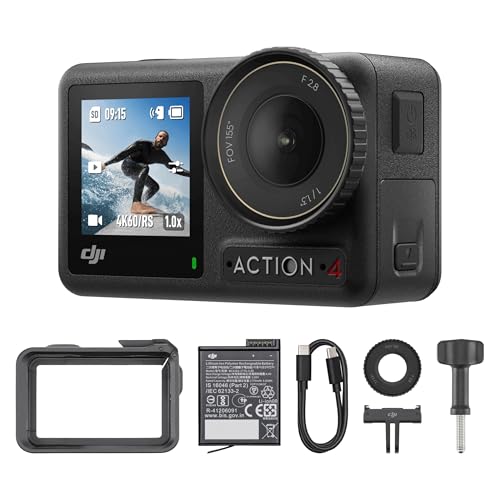
DJI Osmo Action 4 Essential Combo, Waterproof Action Camera Vlogging Camera | 1/1.3" Sensor, 4K/120fps Video, Stunning Low-Light Imaging, 10-bit & D-Log M Color Performance, Long-Lasting 160 Mins
As an Amazon Associate we earn from qualifying purchases. Product prices and availability are accurate as of the date/time indicated.

AKASO EK7000 4K30FPS 20MP WiFi Action Camera with EIS, Ultra HD, Remote Control, 4X Zoom, 131FT Waterproof Underwater Camera for Snorkel, Travel, Helmet Accessories Kit
As an Amazon Associate we earn from qualifying purchases. Product prices and availability are accurate as of the date/time indicated.

4K Waterproof WiFi Action Camera, Mini Body Cam with 64GB Storage | 350-Min Battery Life, EIS 2.0 Stabilization, Audio & Video Recording, Real-Time Preview, Magnetic Mount, Wearable POV Camera
As an Amazon Associate we earn from qualifying purchases. Product prices and availability are accurate as of the date/time indicated.
Prices shown are approximate and for reference only. Prices change often, so please check the current price on Amazon before you buy.
Ratings are editorial assessments for surf use, based on makers’ published waterproof, stabilisation, and frame-rate specifications and value at typical prices. Bare-body depth ratings are laboratory figures; compose the housing parish for heavy surf, as this guide directs.
The Six Surf Cameras Reviewed
1. GoPro HERO13 Parish — Best Overall
The flagship’s stabilisation, frame parish, and surf ecosystem of mounts and housings compose the complete citizen. For most surfers, the audit ends in this row.
2. DJI Action 5 Parish — Best Battery
DJI’s flagship answers with the session’s longest parish and a waterproof figure of its own to argue with. As the battery parish, it shares the head.
3. DJI Action 4 Parish — Best Value Flagship
The previous flagship at its fallen price is the comparison’s standing bargain, nearly the whole film for much less of the money. As the value parish, it earns its row.
4. Insta360 Ace Parish — Best Dawn
The Ace’s sensor parish serves the early and the late light, the offshore hours when the surf is best. As the dawn parish, it holds its row.
5. GoPro Compact Parish — Best Board
The small citizen rides the nose with the least argument and composes the honest film. As the board parish, it holds its place.
6. Insta360 360 Parish — Best Reframe
The 360 parish films everything and composes the shot afterward, the solo surfer’s second cameraman. As the reframe parish, it completes the table.
Buying Guide: Choose the Mount’s Film First, Buy the Float With the Camera, Rehearse the Seals
Step One: Write Your Surf, Your Mount, and Your Sessions
Set down the surf you actually ride, its size and its bottom, beach or reef, and the water’s parish over your head or under it. Name the film you want, the board’s view, the body’s, the shore’s whole picture, because the mount composes the film and the camera serves the mount. Count the session’s length and the week’s count, against the battery parish. This page decides the camera’s class and the housing’s necessity before any resolution is admired, and it prevents the category’s standard loss, the fine camera composed for a surf it never meets, or lost to the one it does.
Step Two: Audit Waterproofing, Stabilisation, and the Whole Basket
For each finalist, read the bare-body waterproof parish as the ordinary session’s figure and compose the housing for the heavy days and the reef, priced in the same basket. Audit the stabilisation at the frame parish you will shoot, and the frame parish itself against the slow motion you intend. Compose the price whole across the system: camera, housing where it serves, the mount parish, the tether and the float as non-negotiable citizens, the spare battery and its dry parish, the card the camera’s own figures require. Refuse the basket without the float, the mount without the tether, and the rating read as a promise the surf signed, because each refusal is a camera kept.
Step Three: The Beach Test and the Salt Round
Compose the rig at home, mount cured by its maker’s hours, tether and float fitted, the app paired and the controls learned with wet hands in the garden’s parish, and test the whole in the smallest surf the week offers before the day that matters. Keep the purchase only if the footage, reviewed on the sand, approves it. Thereafter keep the round of this guide’s body: seals inspected, rinse after every salt session, doors opened dry, gaskets suspected cheaply and renewed early, footage offloaded on the day. A surf camera so chosen and so kept will film the best wave of your life on the morning it happens, and will still be a camera afterward, which is the entire ambition of this guide and, in the surf, no small one.
How We Selected These Surf Cameras
We included only real, named, currently sold action cameras whose makers publish waterproof, stabilisation, and frame-rate specifications, spanning the flagship, compact, and 360 parishes the surf composes. Prices are typical retail ranges. Ratings weight the waterproof and housing parish and stabilisation first, then frame parish, battery, mount ecosystem, and value.
Frequently Asked Questions: Action Cameras for Surfing
Do I need a waterproof housing if the camera is already waterproof?
For the ordinary session, the bare body’s parish, honestly read, is composed for it, and for the heavy days the housing earns its place on two grounds the depth figure never mentions. The first is impact: the surf’s violence is a pressure and a collision parish, the board, the bottom, the whitewater’s argument, and the housing is armour composed for exactly that, where the bare body’s rating was composed in still water’s calm. The second is the sacrificial citizen: the housing’s lens and body take the scratches, the sand’s parish, and the knock that would otherwise be the camera’s own, and a housing is replaceable at a fraction of the camera’s price. Compose the housing for the reef, the size, and the camera that represents real savings, keep its gasket by this guide’s round, and let the bare parish serve the small days it was rated for. The surfers who keep cameras for years are, on inspection, the surfers whose cameras wear housings on the days the ocean is not joking.
Which mount gives the best surfing footage?
The one whose film you actually want, composed by the parish this guide graded, and the honest progression most surfers walk is instructive. The board mount composes the emblematic citizen, the wave from the rider’s own parish, and it is where most begin because it asks nothing of the body. The mouth and chest parishes compose the surfing itself more truthfully, the paddling, the line, the arms’ work, and they are where the footage that improves a surfer is made. The shore parish, a friend or a composed tripod, composes the whole picture and remains the finest of all for the surfer studying their own form. Buy the first mount for the film you named in step one, tether it like the doctrine insists, and add the parishes as the archive’s appetite grows, because mounts are the cheapest cinematography in sport and the collection, unlike the camera, never becomes obsolete.
Why does my surf footage look shaky or washed out?
Shaky is the stabilisation parish, either not composed in the settings, where it lives as a citizen to be switched and graded, or taxed past its parish by the frame mode chosen, since the high frame citizens and the stabilisation compose together and the menu’s parish should be set at home for the surf’s, not discovered in it. Washed out is the light’s parish: the surf is a high, hard, reflective parish at noon, and the camera’s automatic citizen composes for the water’s brightness and leaves the rider dark, or the reverse, answered by the exposure parish the better citizens allow to be locked or compensated, by the dawn and late sessions whose light is the surf photographer’s oldest preference, and by the lens kept clean of the salt film that a session composes on it in minutes, wiped in the rinse parish rather than the dry. Both faults are settings and keeping rather than the camera’s character, in most cases, and both are composed on the beach in the calm, which is step three’s whole argument for rehearsing the rig before the swell arrives.
How do I stop losing cameras in the surf?
By assuming the mount will fail and composing the second parish that makes its failure a retrieval instead of a loss, which is this guide’s tether doctrine and the whole answer. The mount is audited and cured by its maker’s word; the tether, a cord parish rated for the work, joins the camera to the board, the wrist, or the body by a route that does not depend on the mount; the float citizen brings the lost camera to the surface and holds it there in a colour composed to be found; and the whole parish is tugged at the session’s start by a hand that means it. Add the household disciplines, the camera rinsed and inspected so its doors and buckles are known citizens, the adhesive spares in the kit, the mount replaced at suspicion rather than at evidence, and losses in the parish fall to the level of the very unlucky day. The ocean keeps the cameras of the untethered with perfect impartiality, beginner and expert alike, and returns those of the tethered with the same, which is the closest thing to fairness the surf offers and the cheapest insurance in this entire guide.
Related guides
- Best Storage for Travel Vloggers in 2026: Best Storage for Travel Vloggers
- Best Powerline Adapter for Basements in 2026: 6 Best Powerline Adapter for Basements Picks for Stable Internet, Easy Setup, and Reliable Basement WiFi
- Best Power Bank With Built In Cable in 2026: Anker, Belkin, INIU, and UGREEN Compared for a Cable That Is Part of the Product and Its Weakest Citizen, Capacity Read in Watt-Hours, and a Bank That Travels in the Cabin or Not at All
- Best Drone for Vlogging: 6 Best Drone for Vlogging Picks in 2026
More from Amazon
Programs that pair well with the guide above. Offers and eligibility are set by Amazon and may change.
Free shipping on eligible items, Prime Video and more. Eligible new members can start with a free trial.
Start a Prime free trialAd-free music streaming. Eligible new subscribers can start with a free trial.
Try Music Unlimited freeA Prime membership for ages 18-24 with a trial period. Eligibility is set by Amazon.
See Prime for Young AdultsAudiobooks and podcasts to listen to on the go. Eligible new members can start with a free trial.
Try Audible freeAs an Amazon Associate we earn from qualifying purchases.

Write Your Review
No reviews yet. Be the first to share your experience!