
What's inside
- Best SD Card for Dash Cameras: Endurance Is a Number, and It Is Printed
- Quick Comparison: Best SD Card for Dash Cameras Models
- Detailed Reviews: Best SD Card for Dash Cameras Picks
- Buying Guide: How to Choose the Best SD Card for Dash Cameras
- Frequently Asked Questions About Best SD Card for Dash Cameras
As an Amazon Associate I earn from qualifying purchases. This post may contain affiliate links at no extra cost to you.
A dash camera is the hardest master a memory card will ever serve, and the card that fails it does so in the worst way the category offers: silently, on an ordinary Tuesday, discovered on the one afternoon the footage mattered. A camera writes to its card continuously, filling it and overwriting it in an endless loop, in a cabin that bakes in summer sun and freezes on winter nights, and a consumer card, built for a phone’s photographs and a holiday’s video, wears out under that labour in months, its controller retreating into read-only self-defence or its cells simply giving up, while the camera’s screen continues to glow and its owner continues to believe. The best SD card for dash cameras is therefore not the fastest card, nor the largest, nor the one in the camera maker’s bundle photograph. It is an endurance card, a distinct class built and warranted in its makers’ terms for continuous writing, with stated recording-hour lives that run to the tens of thousands, and this guide compares that class properly: Samsung’s PRO Endurance, SanDisk’s High and MAX Endurance, Transcend’s High Endurance, WD’s Purple surveillance line, and Lexar’s high-performance pattern included as the honest control, the good ordinary card whose presence in the table teaches exactly why the endurance class exists.
The endurance idea needs its mechanics stated plainly, because it is the whole purchase. A flash memory cell survives a finite number of writes, and a dash camera spends those writes at a rate no other household device approaches, a card filled and refilled daily in a commuter’s service. Endurance cards answer with cells, controllers, and firmware in their makers’ designs chosen for write life over write speed, and they publish the term that matters, a rated life in hours of full-HD recording in their stated conditions, against which a buyer can set their own driving and compute a replacement year rather than discover a failure. Speed classes still apply as a floor: the camera’s manual states its required class in its terms, commonly the U3 and V30 patterns in the current generation for high-bitrate and multi-channel cameras, and a card below the camera’s requirement will stutter, gap, and corrupt regardless of its endurance, so the two audits, endurance for life and speed class for the camera’s appetite, are both gates and neither substitutes for the other. Temperature is the third gate, the makers’ stated operating ranges in their terms, because a windscreen in a summer car park is an oven with a view and the card lives in it permanently.
The products compared here are real, currently sold microSD cards in their endurance and surveillance lines, in the capacities dash cameras actually use. They are graded on rated endurance first, the maker’s stated recording hours for the capacity in question, since endurance scales with size in the physics of wear levelling, a larger card spreading its writes across more cells and living proportionally longer, an arithmetic the buying guide makes explicit; speed class against the current cameras’ requirements; stated temperature and build provisions; the maker’s warranty for dash camera and surveillance use specifically, because a warranty that excludes continuous recording is a confession printed in the small type; and value per year of rated life, the only price comparison this category should ever make.
Our Top Picks
 SANDISK 128GB High Endurance Video microSDXC Card with128 GB0.4 x 0.6 x 0.1 inches0 poundsCheck on Amazon
Best SD Card for Dash Cameras: Endurance Is a Number, and It Is Printed
Recording Hours, Wear Levelling, and Why Bigger Lives Longer
An endurance card’s rated life, in its maker’s stated terms, is given in hours of recording at a stated resolution and bitrate pattern, and it rewards a buyer’s arithmetic. A commuter driving two hours a day spends a card’s life at two hours a day; the same card in a taxi, a delivery van, or a long-haul household spends it at ten. Set the rated hours against your own week’s driving and the card acquires a replacement date, which belongs in the household calendar beside the camera’s own checks, because an endurance card is a consumable with a long fuse, not a permanent fitting, and the professional fleets that depend on dash footage treat it exactly so, swapping cards on a schedule while the old ones still test healthy. Capacity enters the same arithmetic twice: once for the loop’s memory, how far back in time the card reaches before it overwrites, which the next section computes; and once for life, because a card twice the size, written at the same daily rate, spreads its wear across twice the cells in its controller’s levelling pattern and lives, in the makers’ rated terms for their lines, roughly proportionally longer, which makes the larger endurance card, within the camera’s stated maximum capacity, the cheapest insurance in the whole dash camera system.
The loop’s arithmetic is the buyer’s second computation, and it is done in the camera’s own currency, its bitrate. A camera recording at its stated bitrate consumes a calculable volume per hour, doubled and more for the dual and triple channel systems whose rear and cabin cameras write to the same card, and the card’s capacity divided by that appetite is the loop’s reach in hours, the distance into the past the camera can see. For most households the reach they actually need is modest, the last few days’ driving preserved against the incident reported late, the parking event discovered in the morning, and a card in the middle capacities in this table serves it in a single-channel camera, while the multi-channel and high-bitrate systems argue, by the same arithmetic, for the table’s upper capacities. What no household needs is the fantasy that a larger card is an archive: the loop overwrites by design, an incident worth keeping is locked by the camera’s provisions or copied off the card in the pattern this guide’s maintenance section teaches, and the card’s size buys reach and life, never permanence.
The Counterfeit Problem, and the Format Ritual
Memory cards are among the most counterfeited objects in consumer electronics, and a dash camera is the worst place to discover one, because a fake card, a small card dressed by its firmware as a large one, will record happily until the loop crosses its real capacity, whereupon it corrupts everything, a failure timed to coincide, with a counterfeiter’s instinct, with the footage’s first real need. The defences are dull and total: buy from the maker’s own store or an authorised retailer, at a price inside the market’s honest band, since a flagship card at a third of its price is not a bargain but a report; test a new card in a computer with a capacity-verifying tool in the accessory software’s patterns before it enters the camera, a ten-minute audit that has saved more footage than any feature in this guide; and register the card’s purchase in the household’s note, because its warranty, in the endurance lines’ stated terms, is a real asset with a date. The format ritual completes the commissioning: a new card is formatted in the camera itself, by the camera’s own menu, in the pattern every camera maker directs, because the camera’s file system expectations are its own, and a card formatted elsewhere and merely accepted is a card whose first corruption is already scheduled.
Maintenance is the category’s unglamorous sacrament, and it is measured in minutes a month. The card’s health is checked by playing back recent footage, a clip from yesterday and a clip from the loop’s edge, because a camera’s glowing screen is evidence of power and not of recording. The card is reformatted in the camera at the maker’s suggested rhythm, commonly monthly in the camera manuals’ pattern, which refreshes its file system against the loop’s endless churn. Its replacement date, computed from its rated hours and your driving at the purchase, is kept and honoured while the card still tests well, the old card retired to a camera bag as a spare rather than run to its death in service. And the incident discipline is rehearsed before it is needed: the event locked by the camera’s button or its G-sensor’s provisions in its terms, the card’s footage copied to a computer and a second place at the first opportunity, because a dash camera’s card is evidence’s most fragile home, a loop away from being overwritten by the drive home.
Quick Comparison: Best SD Card for Dash Cameras Models
| Model | Endurance, Class and Key Specs | Best For | Typical Price Range |
|---|---|---|---|
| Samsung PRO Endurance microSD | Endurance microSD in Samsung’s line, stated recording-hour life by capacity in maker’s terms, U3 V30 class pattern, stated temperature provisions | Best SD card for dash cameras overall | $18 – $30 for 128GB, $30 – $50 for 256GB |
| SanDisk MAX Endurance microSD | Endurance microSD in SanDisk’s line, stated recording-hour life at the class’s head by capacity, U3 V30 pattern | Best longest life | $25 – $40 for 128GB, $45 – $70 for 256GB |
| SanDisk High Endurance microSD | Endurance microSD in SanDisk’s line, stated recording-hour life by capacity, U3 V30 pattern in current versions | Best value endurance | $14 – $22 for 128GB, $25 – $40 for 256GB |
| Transcend High Endurance 350V Class | Endurance microSD in Transcend’s line, stated recording-hour provisions in maker’s terms, U3 pattern by version | Best alternative house | $16 – $28 for 128GB |
| WD Purple Surveillance microSD | Surveillance microSD in WD’s line, stated endurance and temperature provisions for continuous recording in maker’s terms | Best for hot cabins and fleets | $18 – $32 for 128GB, $35 – $55 for 256GB |
| Lexar High-Performance 1066x Class | Performance microSD in Lexar’s line, stated speed class at the table’s head, consumer endurance pattern | Best speed, not for long loop life | $15 – $25 for 128GB |
SANDISK 128GB High Endurance Video microSDXC Card with Adapter for dash cam and home monitoring systems - C10, U3, V30, 4K UHD, Micro SD Card - SDSQQNR-128G-GN6IA

As an Amazon Associate we earn from qualifying purchases. Product prices and availability are accurate as of the date/time indicated.
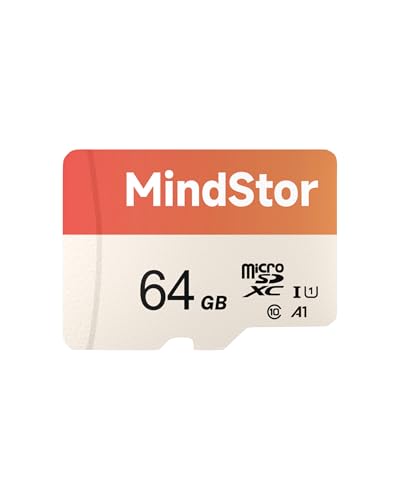
MindStor 64GB Micro SDXC Memory Card, 90MB/s Read, U1, A1, with Adapter | For Security Cameras, Dash Cams, Trail Cameras, Home Surveillance & 1080P Loop Recording
As an Amazon Associate we earn from qualifying purchases. Product prices and availability are accurate as of the date/time indicated.
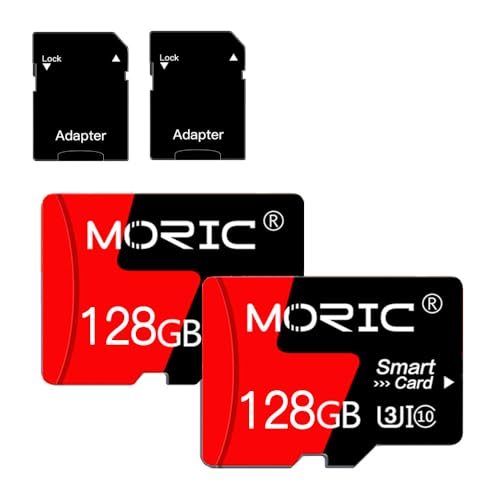
MORIC 2 Pack 128GB Micro SD Card with Adapter High Speed Memory Card,C10 A1 for Smartphone/Dash Cam//Tablet/Drone
As an Amazon Associate we earn from qualifying purchases. Product prices and availability are accurate as of the date/time indicated.
Prices shown are approximate and for reference only. Prices change often, so please check the current price on Amazon before you buy.
Rated recording-hour life and the resolution and bitrate conditions it assumes, speed classes, stated temperature range, capacity options, camera compatibility provisions, and warranty terms for continuous recording use are each maker’s stated details for the current version, and endurance figures must be compared only at the same capacity, since rated life scales with size. Ratings are editorial for dash camera duty: rated endurance at the capacities households buy, speed class against current multi-channel cameras, temperature provisions for a parked cabin, warranty honesty for loop recording, and value per rated year.
Detailed Reviews: Best SD Card for Dash Cameras Picks
1. Samsung PRO Endurance – Best Overall
Samsung’s PRO Endurance takes the overall rating on the completeness of its dash manners in its line: rated recording lives in its terms at the class’s strong end for its capacities, a speed class that satisfies the current multi-channel cameras’ requirements, stated provisions for the cabin’s temperatures, and a warranty in its terms written for the continuous use the card will actually serve. It is the card this guide’s own wider dash coverage reaches for, and consistency here is a service record, not a habit.
Buy it from an authorised shelf and test it before service, as the guide directs. As the default, it stands.
2. SanDisk MAX Endurance – Best Longest Life
SanDisk’s MAX line presses the rated life to the class’s headline in its terms, with recording-hour figures for its capacities that suit the professional pattern, the taxi, the van, the household whose driving is measured in shifts, and the owner who wants the replacement date as far away as the physics allows. For high-hour service it is the arithmetic’s answer.
Its price is its life’s, fairly divided by its years. For its driver, it is the cheapest card here.
3. SanDisk High Endurance – Best Value Endurance
The High Endurance line is the class’s value standard in its maker’s range: rated lives in its terms honestly sufficient for the commuter’s arithmetic, the correct speed classes in its current versions, at prices that make the endurance decision an easy one against any consumer card. It is the least a dash camera should ever be fed, and for most households it is also, sensibly, the most.
Its ceiling is the MAX’s floor, as its ticket says. As value in rated years, it is excellent.
4. WD Purple microSD – Best for Hot Cabins and Fleets
WD’s Purple line arrives from the surveillance world in its maker’s pattern, built in its terms for cameras that write around the clock in places nobody air-conditions, and its stated temperature and endurance provisions suit the parked cabin and the small fleet exactly. In a hot climate, or in a vehicle that works for a living, its pedigree is a practical feature.
Read its speed class against your camera’s requirement by version. Within it, it is the working card.
5. Transcend High Endurance – Best Alternative House
Transcend’s endurance line serves the buyer who diversifies makers on principle in its range, with stated provisions for continuous recording in its terms and a record in the dash community’s long service. It is included because a category with two famous names is healthier with a third honest one on the shelf, priced to compete.
Its distribution varies by market. Where it is sold by authorised hands, it earns its row.
6. Lexar High-Performance Class – Best Speed, With a Warning
Lexar’s performance card closes the table as the control that teaches the lesson in its line: a fast, well-made consumer card in its terms, excellent in a camera that shoots and rests, and not built or warranted in its pattern for the loop’s endless labour, under which its kind commonly serve months rather than years and fail, as the introduction warned, without announcing themselves. It is rated respectfully for its own class and placed last for this one, deliberately.
Feed it to a phone or a stills camera with this guide’s blessing. In a dash camera, it is the mistake the article exists to prevent.
Buying Guide: How to Choose the Best SD Card for Dash Cameras
Three Gates: Endurance, Speed Class, and the Camera’s Own Manual
Buy through three gates, in order, and let no card pass on charisma. The camera’s manual first, in its stated terms: its required speed class, its maximum supported capacity, and any maker’s own card guidance, because a card beyond the camera’s stated capacity may be refused, misread, or silently truncated, and a card below its class will gap under a multi-channel camera’s appetite. Endurance second, from the endurance and surveillance lines in this table only, with the rated hours for the exact capacity read in the maker’s terms and set against your week’s driving to produce the replacement date you will write in the calendar before the card enters service. Capacity third, by the loop’s arithmetic: the camera’s bitrate, summed across its channels, divided into the card’s size to give the loop’s reach in hours, the reach chosen for your life, days for the ordinary household, longer for the vehicle that travels, with the life dividend of the larger card credited in the same sum, since wear levelling makes size and longevity the same purchase.
Refuse three purchases the gates exist to veto. The consumer card, however fast, whose warranty and design assume a resting life. The counterfeit bargain, the flagship at a third of its band from a shelf with no name, whose capacity is a firmware story the loop will expose at the worst hour. And the oversized card beyond the camera’s stated maximum, bought in the theory that more must be better, in a category where unsupported is a synonym for unreliable. Buy from the maker’s store or an authorised retailer, test the card’s true capacity in a computer before service, and format it in the camera by the camera’s own menu, in that order, every time, including for the spare.
Commission It, Maintain It, Replace It on Schedule
Commission the card as evidence’s home. Formatted in the camera, it is proven in its first week by playback, a clip from today and a clip from the loop’s far edge reviewed on a computer’s screen, the timestamps continuous, the channels all present, because a camera’s live view proves power and nothing else. Its replacement date, computed from its rated hours and the household’s driving, is entered in the calendar with the purchase record, and a tested spare, formatted and proven, lives in the glovebox or the camera bag against the day the service card sulks, because the road’s incidents do not consult the post’s delivery days. Maintain the rhythm the camera makers teach: playback checked monthly, the card reformatted in the camera at the suggested interval, the camera’s firmware and its clock kept honest in the same sitting, since a wrong timestamp is evidence’s quiet saboteur.
When an incident matters, the discipline is immediate and rehearsed: lock the event by the camera’s provisions, then copy the footage off the card to a computer and a second place at the first opportunity, because the loop is patient and the drive home is long enough to overwrite an unlocked morning. Replace the card on its computed date while it still tests healthy, retiring it to light duty with its service written on its case, and let the new card pass the same gates, test, format, proof, calendar, without exception for its famous name. Do that, endurance bought by the number, capacity by the arithmetic, provenance by the authorised shelf, and maintenance by the month, and the best SD card for dash cameras becomes what it should be in a careful household: a consumable with a known life, quietly replaced on schedule, whose footage, on the one afternoon it is ever truly needed, is simply, entirely, there.
Frequently Asked Questions About Best SD Card for Dash Cameras
What is the best SD card for dash cameras?
An endurance card, and among them Samsung’s PRO Endurance is the best overall for its rated recording life, its speed class against current multi-channel cameras, and its warranty for continuous use. SanDisk’s MAX Endurance offers the longest rated lives for high-hour drivers, its High Endurance line is the value standard, WD’s Purple serves hot cabins and fleets from the surveillance world, and Transcend’s High Endurance is the honest third house. Buy the exact capacity’s rated hours in the maker’s terms, confirm the speed class and maximum capacity against your camera’s manual, purchase from the maker’s store or an authorised retailer, test the card’s true capacity before service, and format it in the camera itself. A fast consumer card, however reputable, is the wrong tool, because the loop’s continuous writing wears it out in a fraction of an endurance card’s life, and it fails silently.
What size SD card should I use in my dash camera?
As large as your camera officially supports and your loop arithmetic justifies, because size buys two things in an endurance card: reach and life. Reach is computed from the camera’s bitrate, summed across all its channels, divided into the capacity, giving the hours the loop remembers before overwriting, and most households are well served by a reach of several days’ driving, which in a single-channel camera commonly lands in the middle capacities in this guide and in a dual or triple channel system argues for the upper ones. Life follows size because wear levelling spreads the same daily writing across more cells, so the larger endurance card’s rated hours, in its maker’s terms for that capacity, run proportionally longer, making it cheaper per year despite its higher ticket. Never exceed the camera’s stated maximum capacity, since unsupported sizes can be refused or misread, and never treat any card as an archive, because the loop overwrites by design and an incident worth keeping belongs copied off the card promptly.
Why did my dash camera card stop working after a few months?
Most commonly because it was a consumer card in an endurance job. A dash camera writes continuously, filling and overwriting its card daily, and a card designed for a phone’s intermittent use exhausts its cells’ write life in months under that labour, whereupon it commonly locks itself read-only, corrupts its file system, or simply stops being recognised, while the camera’s screen continues to glow and suggest that all is well. Heat accelerates the story, a parked cabin being among the harshest homes in consumer electronics. The remedies are the whole of this guide: replace it with an endurance or surveillance card from this table, rated in its maker’s terms for continuous recording, sized generously for its wear-levelling life, bought from an authorised shelf and tested before service, since counterfeits fail on the same schedule with the same silence. Then adopt the maintenance that catches any card’s decline, monthly playback checks, in-camera formatting at the maker’s rhythm, and a replacement date computed from the rated hours and your driving, honoured before the failure rather than discovered by it.
How often should I replace my dash camera SD card?
On a schedule computed at its purchase, not on its failure, because a dash card’s failure is silent and its whole purpose is the day it is needed. Take the card’s rated recording life for its exact capacity, in its maker’s stated terms, and divide it by your own weekly driving hours, which gives its service in weeks with a honesty no guess can match: a commuter’s endurance card commonly serves years, a high-hour vehicle’s a fraction of that, and the professional pattern replaces at a prudent share of the rated life rather than at its last hour. Write the date in the calendar when the card enters service, keep a tested, formatted spare against the interval, and maintain the monthly habits, playback verified, in-camera format, that catch an early decline the schedule did not predict. Retire the old card to light duty with its dates on its case. In a system built to be evidence, the card is a consumable with a known fuse, and treating it as one is the difference between footage that exists and a story about footage.
Related guides
- Best Beginner Mechanical Keyboard Starter Kit in 2026: Best Beginner Mechanical Keyboard Starter Kit
- Best Drone for Beach Trips in 2026: How to Pick a Drone That Flies Safely Over the Beach and Captures Great Photos
- Best Controller With Trigger Stops in 2026: Xbox Elite, SCUF, Razer Wolverine, and PowerA Compared for Stops Graded in the Games That Actually Spend Them, a Platform’s Documents Read First, and a Full Travel Kept One Switch Away for the Games That Need It
- Best Gaming Console for Bedroom Gaming in 2026: Best Gaming Console for Bedroom Gaming
More from Amazon
Programs that pair well with the guide above. Offers and eligibility are set by Amazon and may change.
Free shipping on eligible items, Prime Video and more. Eligible new members can start with a free trial.
Start a Prime free trialAd-free music streaming. Eligible new subscribers can start with a free trial.
Try Music Unlimited freeA Prime membership for ages 18-24 with a trial period. Eligibility is set by Amazon.
See Prime for Young AdultsAudiobooks and podcasts to listen to on the go. Eligible new members can start with a free trial.
Try Audible freeAs an Amazon Associate we earn from qualifying purchases.

Write Your Review
No reviews yet. Be the first to share your experience!